Françoise Bassand has been active as an artist, curator, and writer in Zurich’s independent art scene since the late 1990s. Her practice has long been shaped by questions of public space, artistic collaboration, and alternative ways of exhibiting art. In this interview, we talk about her artistic journey, the story of bonustrack.zh, and her perspective on independent art spaces today.
Interview by Buket Bal Soezeri
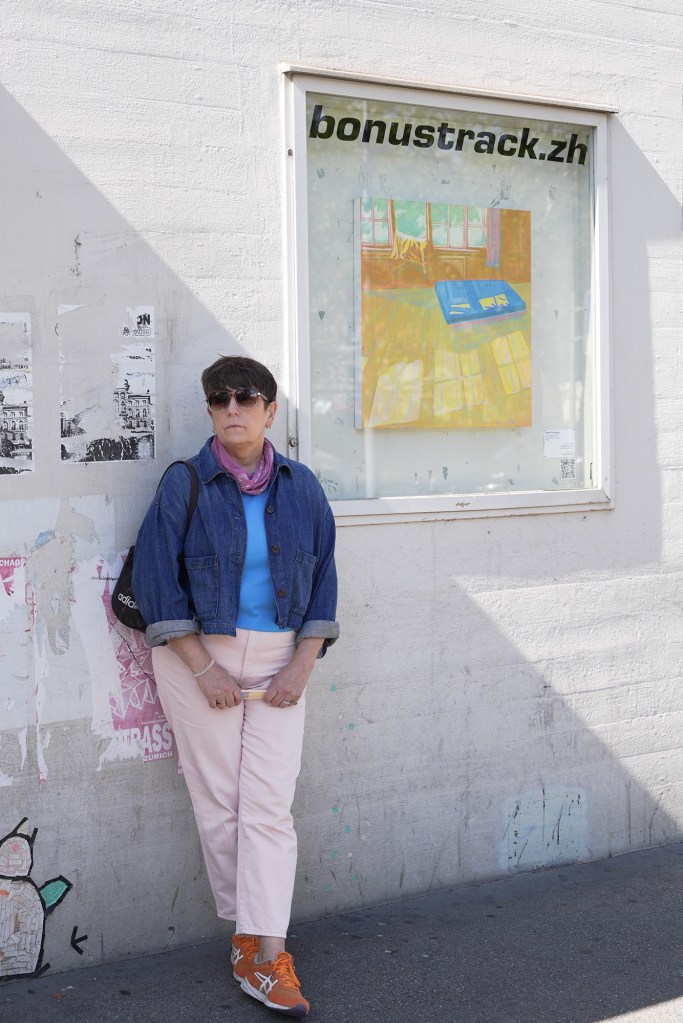
How did your artistic journey begin? What initially drew you to art, and how has your practice as an artist, curator, and writer developed over the years?
I came to the arts via dance / performance and was active in Basel, Zurich, Vienna and the San Francisco Bay Area in my early 20ies. Later I studied at F+ F Schule für experimentelle Gestaltung in Zurich, the only place where you could study Fine Arts in the German speaking part of Switzerland before 1991. Since I grew up bilingually (French and German) language was always an integral part of my practice. All these experiences shaped me as an artist, writer, curator and as a human being.
For many years, you have continued your own artistic practice while also creating spaces where other artists can exhibit their work. How do your identities as an artist and curator influence one another?
After graduating from the art school in Zurich, I first had to find a studio. Therefore I became the co-initiator of an artists studio community in an old (now demolished) textile factory along the river in Zurich, where I also organised exhibitions and open studio weekends. Many people came, from the art scene but also the factory owners (and they loved it). That’s where I realised that the art world runs on happenings and gatherings. People want to meet, discover new ideas, have fun and share experiences.
I am curious about the starting point of bonustrack.zh. How did the idea of transforming a shop window into an independent exhibition space come about? What kinds of possibilities does this spatial format offer you that traditional exhibition spaces do not?
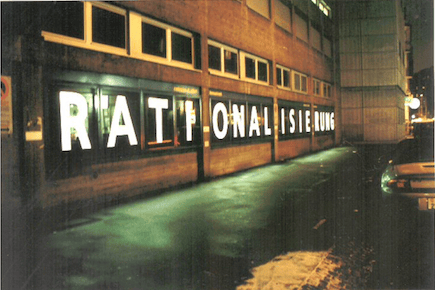
The first bonustrack vitrine started as a side project of celeste & eliot kunstsalon in 1998. There were sixteen big empty showcases at Müllerstrasse in the lively Aussersihl district, where I often passed by on my way home.
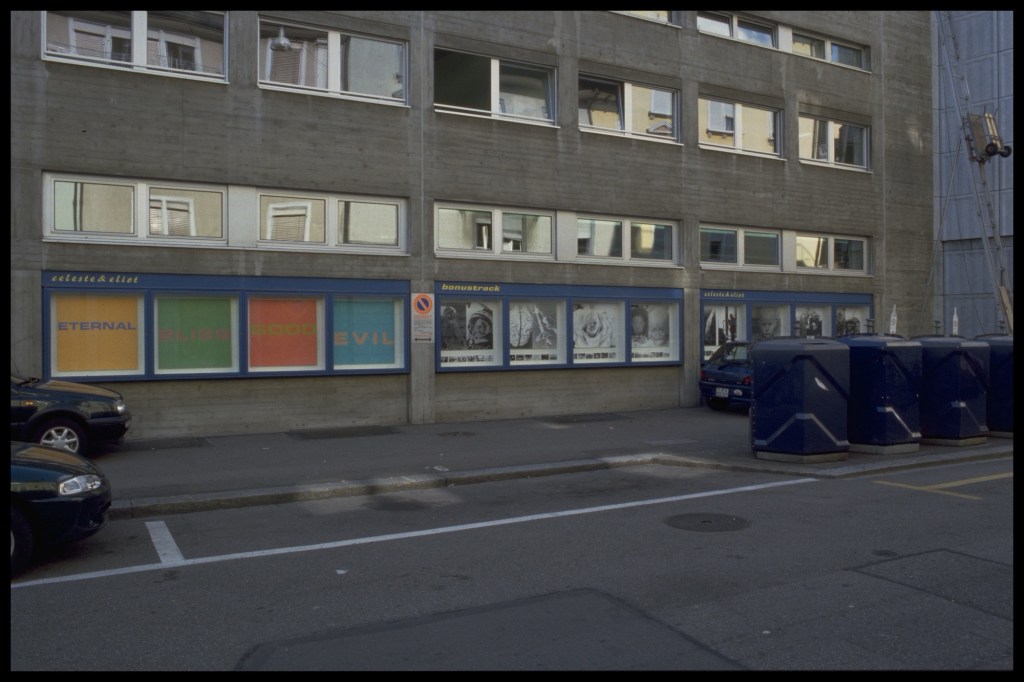
The building belonged to the Swiss Telecom and they were happy to rent out the vitrines to us. The showcases gave much more exposure and visibility to all the involved people. Artists loved to show their works in public space. And even the gallerists’ association of Zurich-Aussersihl included celeste & eliot kunstsalon in their gallery opening weekend, because they liked our fresh and innovative way of showing contemporary art and our impact to successfully reach a younger public.
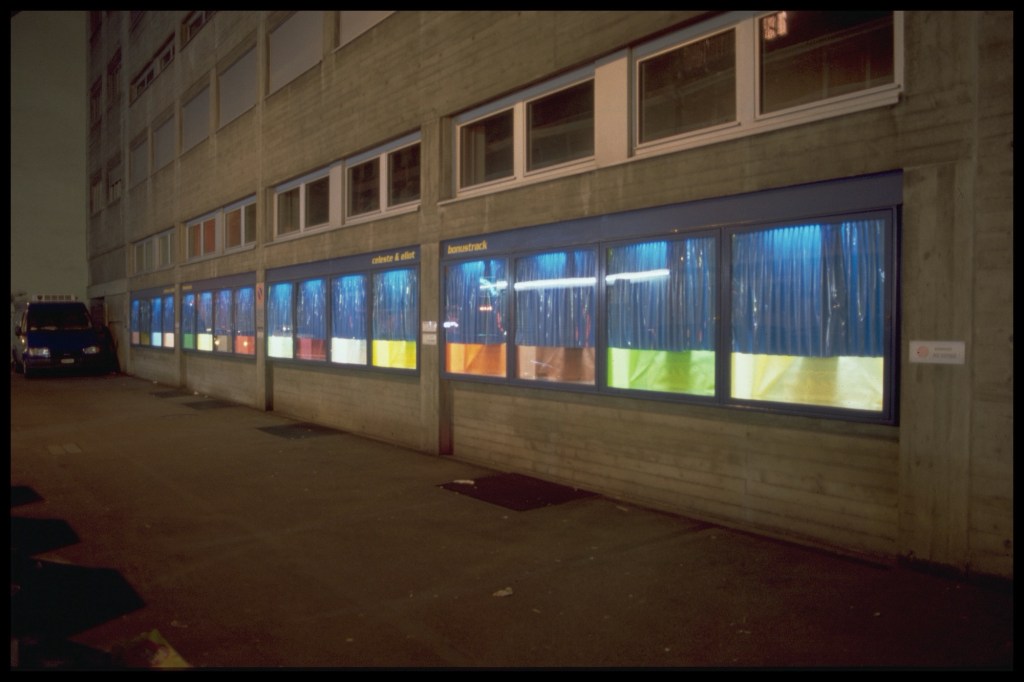
In the late 1990s, together with Martin Furler, you established the independent art space celeste & eliot kunstsalon and the first bonustrack display windows. Where did the need to create this kind of independent exhibition space come from at that time? And after more than two decades, what led you to return to the idea of bonustrack in 2023?
To create an art salon was an artists’ answer to the concept of cool white cube galleries in the 1990ies, where young local artists could only enter as tolerated guests, if any. The international players in London and New York owned the hip places, that decided who would be the next big star in the global art market. We realised that many artists from our own generation would only be shown to a wider public, if we organised the exhibitions ourselves. The creation of independent art spaces were both a self-help project and simply a matter of survival.
Since the pandemic years I was looking for both a studio and exhibition space. It took me over two years to find both. The new bonustrack vitrine was found like the first on: by chance and because the owners of the building liked the idea to show contemporary art works.
Bonustrack.zh is quite different from a traditional gallery space; the works are displayed in a shop window, can be seen at any time of day, and are often also encountered by people who did not specifically come to see the exhibition. Why is this kind of encounter in public space important to you? What kinds of possibilities and challenges do you think arise from making art visible in this way, as opposed to exhibiting it within the context of a gallery or museum?
Visibility in public spaces must not be left solely to government agencies, institutions and commercial entities that can afford to pay a lot of money for public exposure. Cities belong to their residents, not to the powerful and wealthy. Renting a vitrine in a public space and showing contemporary art, is a guerrilla tactic that I enjoy. Since most artists are excluded from the commercial art market, which is celebrated in galleries, museums, and by auction houses, there is an urgent need for bold self-help initiatives.
You have said that, in the age of global digital connectivity, you are more interested in how an artist engages with contemporary issues and makes them visible in their artistic practice than in the artist’s geographical or cultural background. What do you particularly look for when selecting an artist or a work for bonustrack?
I choose artists who are passionate, outspoken, poetic, crazy. True artists are often pariahs and black horses in their own (art) communities. And I only show people who are ready to give something back. For I am truly fed up with people who build their careers exclusively by using and exploiting others.
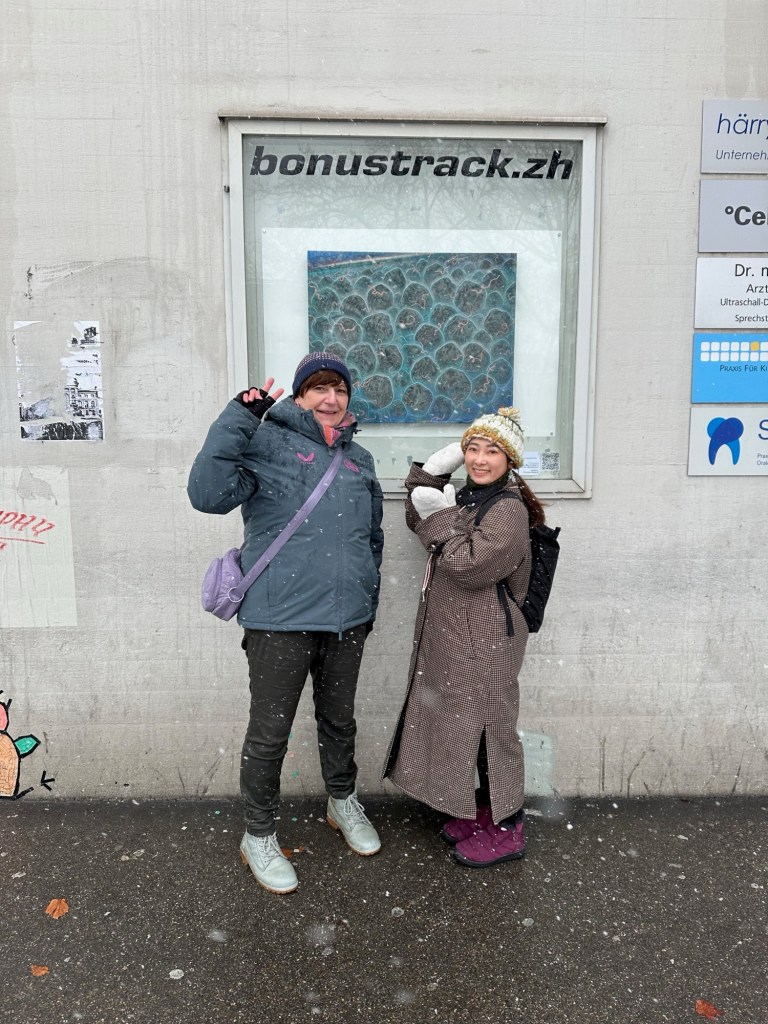
You mention that the exhibitions at bonustrack.zh are curated in close collaboration with the artists. How does your process of working together with an artist usually develop when shaping an exhibition?
My approach is very personalized. I adapt to each person’s work and communication style. Some artists contact me via social media, some I meet at openings or per chance.
It is important to me that the context of the exhibition, its location in the public space, is taken into account and given sufficient consideration in the selection of works. In terms of content and form, I give the artists quite a lot of freedom.
You have been involved with independent art spaces since the 1990s. How have you observed Zurich’s independent art scene change from that period to the present day? Do you think running an independent art space today is easier or more difficult?
It is still not easy! In the 1990ies there were less people in the independent art scene and everyone knew about each other.
Today the scene is highly fragmented and everyone is more isolated. The pandemic really hurt the artists and the art scene terribly, but this topic is a great tabu. I feel more concurrence, every one looks for oneself and their inner circle, it’s a tough fight for visibility and attention. Social media morphed itself into a nasty dictatorship of taste, hipness and credibility.
Everybody for itself and against all others!
Finally, could you tell us about the projects you are currently working on and those you are planning to realize in the future?
My most influential travel led me to Beijing, Singapore and Bangkok during the early 1990ies. It started with Kung fu training and led me to the Shaolin monastery at mount Song, where I meditated in the cave that Bodhidarma lived in for nine years.
Recently I started to study Korean and will go back to South Korea in autumn. East Asia is dynamic, culturally diverse and its cultural impact can’t simply be ignored. I plan to organize more projects including art exchanges with Korea, and hopefully also Japan.


 ArtMeant* Project