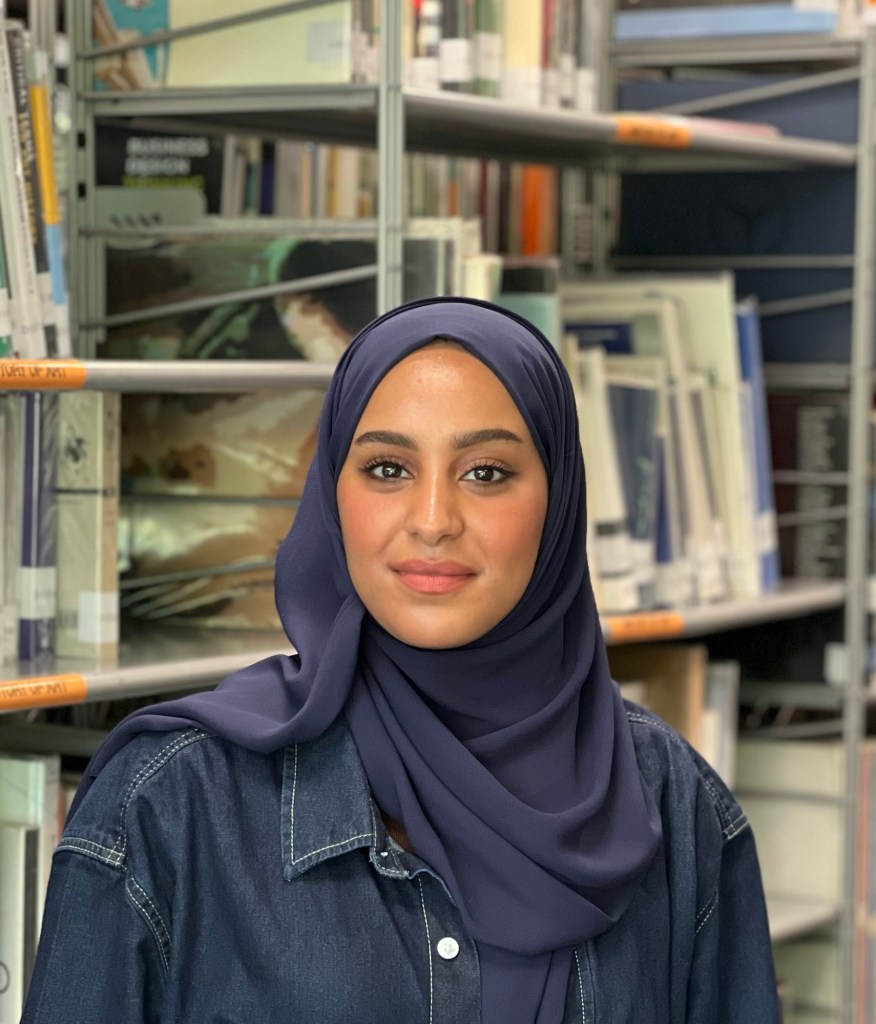
Yasmeen Fekak is an Eritrean artist whose engaging work explores themes of displacement and belonging, drawing heavily on personal and collective memory. Based between Riyadh and Milan, Fekak’s immersive installations such as Engraved Voices weave together layered narratives of history, identity and language. We sat down with her to discuss her artistic practice, her newly published book, and her perspective on the evolving discourse surrounding migration.
Interview by Sanem Nil Şahin
Could you start by sharing a brief summary of your own migration story?
I don’t really feel like it’s just my story; it’s more about my parents and what started with them. They had to flee Eritrea back in the 70s when the war was escalating. After moving through Sudan and different areas, they eventually settled in Saudi Arabia. I was born and raised there, but I didn’t realize I was living in a ‘different’ country until I got older. The culture inside my home was so distinct from what my friends had at school. It was the realization that we weren’t really the same, despite speaking the same language.
I had the chance to experience Engraved Voices at Fabbrica del Vapore, an immersive installation recreating a living room scene, where a cassette player once acted as a kind of teleport between Eritrea, Sudan, and Saudi Arabia. How did you first decide to create this specific piece?
It happened during my first year of my Master’s studies in Milan. There was a period of a few days where I couldn’t connect with my parents because of a glitch with FaceTime, the only platform they use. It hit me that no matter how much technology we have, one small failure makes you feel miles away from the people you care about. That moment made me wonder how they connected with their own parents during their migration.
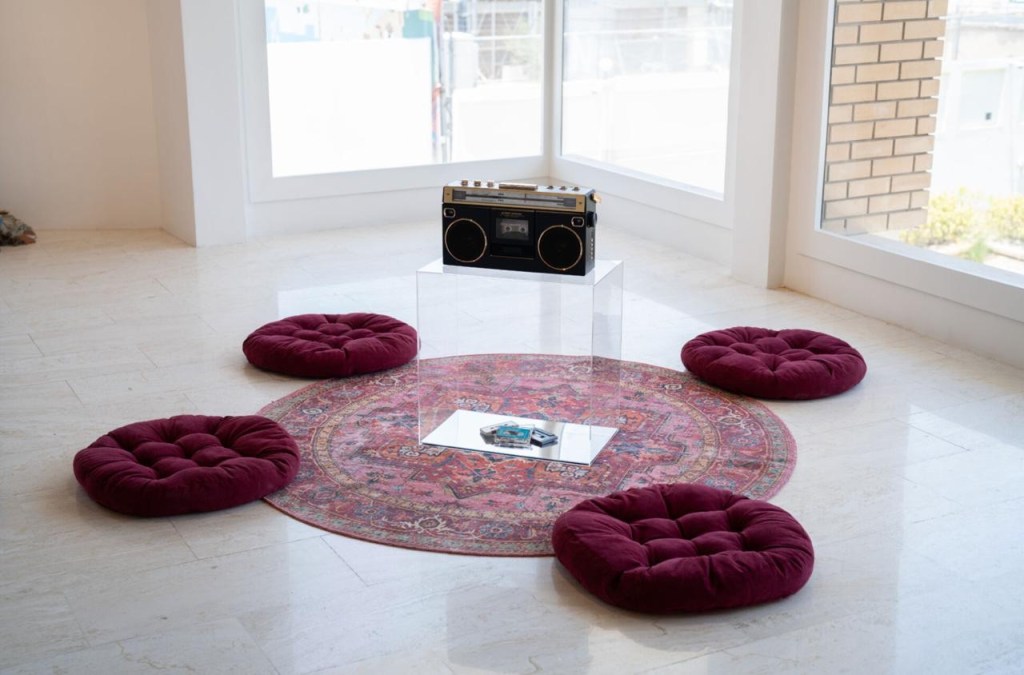
Suddenly, this fading memory surfaced: I remembered my father being so happy receiving a letter with a cassette tape inside. He would gather us all to listen to my grandmother’s voice. I called him, asked about that memory, and once I went back home, we started looking through the archives. That’s how the piece began to form.
Your piece incorporates recordings of your grandmother speaking in Eritrean and your father in Arabic. How did it feel to exhibit these mother tongues in Milan, where neither is commonly spoken? Did you face any linguistic barriers?
I knew that exhibiting these languages in a different country would create a certain distance between the audience and the work. In a way, it was on me to bridge that gap.
I did provide some pamphlets to help translate, but I didn’t want to over-explain. I actually wanted the audience to live through the same situation I experienced growing up. I always needed a mediator, like my father, to translate the language I was ‘supposed’ to speak but didn’t. I wanted that sensation of hearing something and not fully understanding it, but still grasping the emotion through the tone of voice. If someone paused and connected with it,that’s incredible. If they didn’t, they didn’t; that’s part of the reality.
Given the prevalence of migration as an artistic subject, what distinguishes the work of non-immigrant creators addressing this theme? Do you feel a lack of lived experience limits the emotional or socio-political resonance of a work?
That is an intense question. My professor for Visual Arts, Beatrice Catanzaro, once told me: “If you are speaking on behalf of someone else’ s experience -something you haven’t lived firsthand- ensure that person is involved in the story.” To me, it isn’t necessarily a contradiction to speak for someone else, but it becomes problematic when they are left out of the picture. You end up trying to replicate a feeling or a thought they might never have had. You build on assumptions, and as much as you try to honor them, you end up depicting a false experience. In this field, I don’t think that’s valid. Migration is extremely emotional; people are fleeing one situation for another. Imagine someone who lived that reality hearing their story being belittled or misrepresented through an artwork. It’s about honoring the subject. If you haven’t lived it, honor the person who did.
Beyond the socio-political commentary, what are the primary personal motivations that drive you to continuously engage with these complex narratives of migration?
It stems from realizing I wasn’t the only child navigating different cultures. I grew up around immigrant children without even acknowledging it. I only realized our reality when I encountered people who weren’t third-culture children. I saw that they didn’t have the same fears, thoughts, or concerns that my parents had instilled in me. My motivation comes from a desire to communicate these stories, not just mine, but those of my community. I want to dig up the unspoken archives that have been hidden in closets for so long. I want to give them a chance to be seen and lived, carrying them into the future rather than letting them stay buried in the past.
You speak with such a natural poetic rhythm, I imagine that comes from your practice as a poet. Your collection When in Blues is now out in the world. How has it felt to see people respond to something so personal? Has their reading of the ‘blue side’ of things matched what you intended, or have they found their own meanings in it?
When in Blues began as a personal need to process my emotions, never with the intention of publishing it. Because I wasn’t thinking about an audience, I think I was able to write with complete honesty.
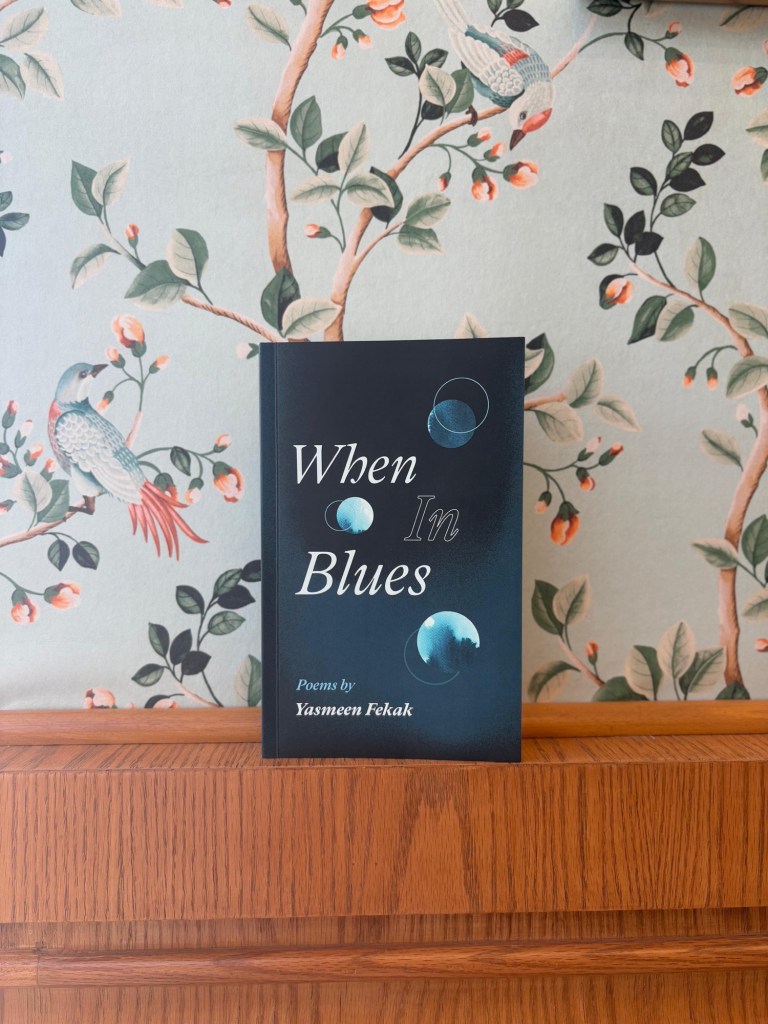
Looking back, many of the poems feel like conversations with someone who was never there to answer. Now that people are reading it, it feels similar to my art practice, where I invite others into intimate archives and shared memories. The responses have been raw and deeply relatable. Although the poems are dated between 2019 and 2022, I see the book less as a timeline and more as an archive of emotions from that period of my life.
Finally, could you tell us about any current projects you are working on?
I’m currently working on a conceptual installation based on letters my aunt received between the 1980s and early 2000s. She was living in Saudi Arabia at the time, while her address were staying the same, many people around her were being displaced. That contrast between permanence and movement became the starting point of the work. One letter, in particular, stayed with me. It was from her childhood friend, Mantegbosh Berhane. After nine years of searching, she managed to find my aunt’s address. The letter arrived on November 7, 1985, during a time of political tension between Eritrea and Ethiopia. With this installation, I’m trying to reopen that interrupted line of communication, more like an attempt to reach Mantegbosh again. The work titled as To Mantegbosh will be presented at ReA! Art Fair at Fabbrica del Vapore in Milan this October.