Basel-based artist Raphael Reichert works with moving images, repetition, accumulation and long-term observation. In this conversation, we discuss artistic production under contemporary working conditions, the relationship between media consumption and artistic practice, and how exhibition contexts continuously reshape the meaning of a work.
“I try not to take my practice too seriously,” Reichert says at the beginning of this conversation. Yet throughout the interview, he offers thoughtful reflections on artistic labour, media consumption, exhibition-making, and the realities of sustaining a practice within today’s art world. Moving between humour, observation, and self-reflection, Reichert’s work reveals how everyday experiences can become both artistic material and a way of understanding the conditions of contemporary life.
Enjoy reading.
Interview by Buket Bal Soezeri
Who is Raphael Reichert? How would you describe yourself as an artist today?
I think I have started to work more and more conceptually and would describe myself mostly as a conceptual artist by now (or post-conceptual? I’m not so sure).
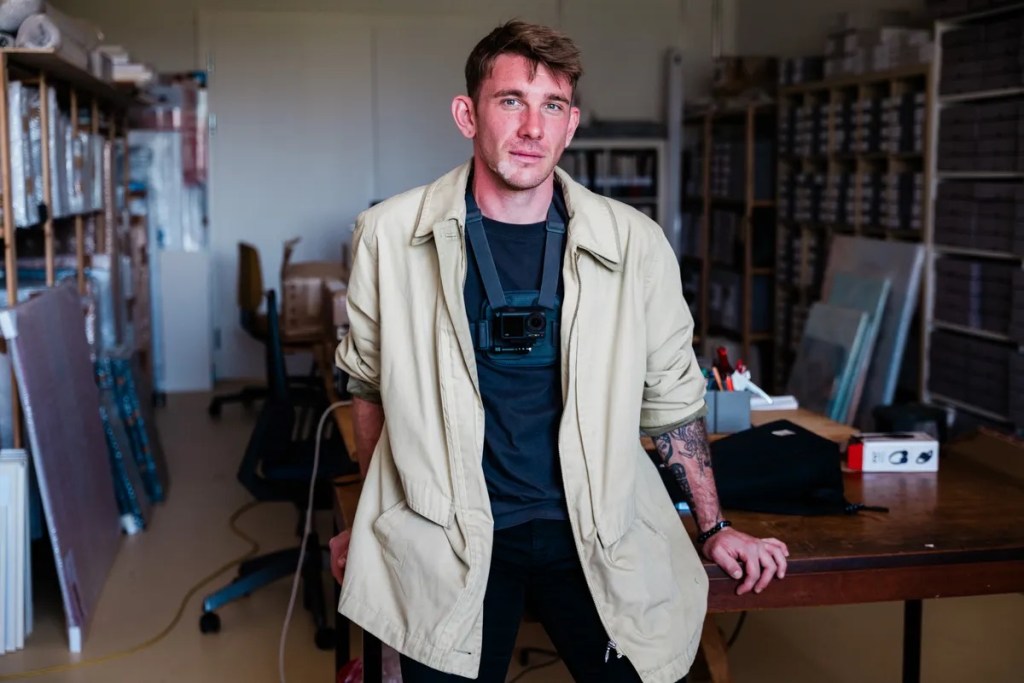
I try not to take my practice too seriously, meaning that I’m trying to have fun with it, working rather casually than super strictly, which can also be recognized as one of my character traits when you get to know me better. There’s always some humor or maybe absurdity involved in my work, and you will find theoretical heaviness rather rarely. Anyhow, once I come up with a new methodology (I try to change it up a bit over the course of the years) and a new project, I do seem to push through quite consistently, even if it means suffering a bit a long the way for the sake of lightness and playfulness.
Video occupies a central position in your practice. What initially drew you to working with moving images?
I think I started working with collections as a method with my bachelor diploma project „200 self-portraits“ back in 2017.
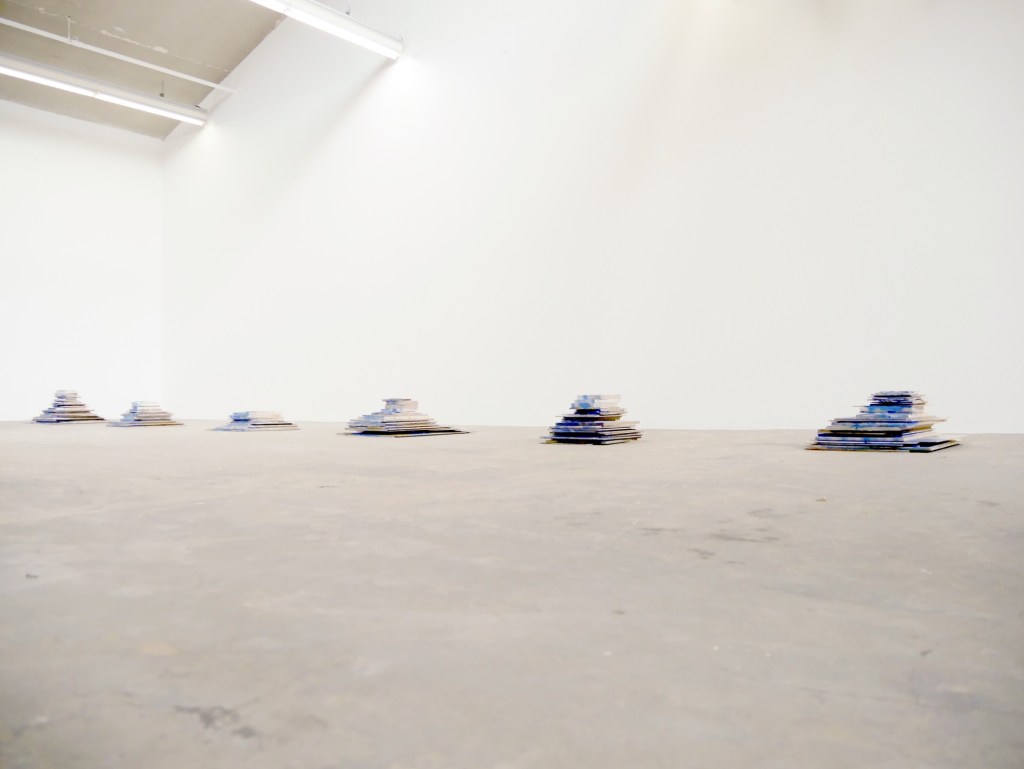
I quickly realized that the medium you choose plays an enormous role when you work like that. Producing only physical work would have resulted in a big storage problem quite quickly.
During art school, I had worked with video a bit already and later got quite inspired by moving image phenomena that can be found on the internet, such as fitness challenges, vlogs, or Instagram reels and stories. So combining collecting with video sort of came naturally. In art school, you learn that the medium has to adhere to the idea and that you cannot justify a choice of medium without reason. Yet I believe production conditions are crucial as well when choosing your method, as we don’t live in a world of abundance with unlimited possibilities. After graduating, many people have to start being realistic, as there’s no level playing field when it comes to opportunities. So it would be presumptuous of me to say that the choice of video as a focal point only came out of interest in the medium itself.
Your works often involve extended durations, repetition, and large amounts of visual material or data. Where does your interest in these temporal and dense structures come from?
This resulted from my own working conditions that I started reflecting on when I started my professional career in the art world as a small intern in one of Basel’s biggest galleries. A lot of flexibility was asked of me (60-90% of work over the course of 5 days a week), but I also wanted to be able to meet friends, do sports, go to exhibitions, and so on. Collecting video footage and other building blocks over a certain amount of time during or in between these activities was initially only meant to be my methodology for a certain body of work for a limited time span.But as my conditions didn’t change, and maybe even worsened later on, as I had not only gained a professional foothold in the art world, but also started curating a bit and doing honorary work as well, this methodology started becoming not only something that felt a bit like home to me. I had actually started enjoying this way of working a lot, being able to switch between various contexts over the course of the day.
For example, I would start the day with a professional meeting, then I would see a friend for coffee, then working for an art association for a few hours, later collecting some footage on the way to an exhibition opening and then finishing the day by going to sports practice. This way of working increasingly started to make more and more sense to me. As most of my projects are of auto-documentary nature, this methodology resulted in being a sort of auto-portrait of my character and my working conditions themselves.
Reading the news has been presented in various cities and contexts over the years. How did this work first emerge, and how has your relationship to it evolved over time?
This work resulted out of the realization that even though I had been an advocate for my close peers and extended surroundings to stay informed on daily local and international news in order to be able to participate in a mostly functioning democracy, I had stopped reading news myself for a few weeks once Trump got reelected into office. It was just too much to handle for a moment and I needed a break.
Back then, I had already been a year-long subscriber to „bajour“, probably the best and most honest local news outlet from Basel, which sends out newsletters every morning.
As a result of this (even though quite a short) break from the news, I didn’t manage to keep up with the unread newsletters anymore that slowly but surely started to accumulate more and more every day. Because for some reason, it was important to me that once I tried to work through this pile of unread emails in my inbox, I would go and catch them up chronologically.
I started to reflect on this and discuss it with my friends and colleagues. It occurred to me that it was contemporary history that I was about to read, once I would try to get up to speed.
Once the number of unread newsletters had reached a baffling number of 200 emails, I decided to challenge myself (and thereby also force myself) to let an audience partake in this catch-up.
I had shown the work as a work in progress from the very beginning. On the first day of production, in May 2025, I was setting up my participation in „Ateliers Ouverts“, an extensive open studio event, which back then spanned the French north-eastern region of Alsace and this year finally crossed the border to Basel for the first time.
Showing an intermediate step so early in the process not only worked as a kickoff for my concept, which I could use to reflect on the work with an audience in a rather informalsetting, but also forced me from the start to accelerate my production process, cause it also added some pressure. In just a few days, I had filmed around 30 of the eventually 360 sequences, during around 5 minutes each.
Only in January 2026 (after the work had been shown in a few group exhibitions as a work-in-progress) was I able to show the finished work in two small solo exhibitions in Switzerland.
I filmed the last sequences, edited and exported the video, and sent it as a transfer link. I did this during a two-month research stay in Argentina, as a result of which I wasn’t even able to see the finished work in these new settings (two video windows from videokunst.ch, one in Bern and one in Zurich).
Anyhow, I saw a particularly interesting and urgent connotation of the work in what it is ideally capable of doing – questioning our own media consumption and reflecting on our relationship with media – during the recent popular vote about cutting the funding for publicly funded media in Switzerland in half.
In your newsletter, you mention cancelled exhibitions, open calls, and the ongoing search for exhibition spaces. To what extent are the conditions of presentation part of your artistic process?
Of course, every work changes its reception when you (re)combine it with other works in group exhibition settings, as well as when the context of presentation changes. It’s quite a challenge to readjust and rethink its reception every time you get a negative response from open calls, or when having to choose to cancel a show because the conditions don’t seem to be the best fit for your work and especially the energy you spend on it.
A lot of energy can get lost along the way, and without a financial safety net behind oneself, this can quite quickly become very exhausting.
Taking regular breaks and also trying to find new inspiration and especially some calmness, as a way for introspection outside of one’s daily surroundings and context can play a crucial role in solving these issues, at least as an acute remedy. Although this is a luxury that cannot be taken for granted and also requires a lot of commitment and planning.
In the exhibition DAY DIGESTION, you describe a strong connection between your own practice and Christoph Renfer’s work ALL TAG_1948_8. How do you see these two works entering into dialogue with one another?
„ALL TAG_1948_8“ by Christoph Renfer works with repetition, documentation of his immediate surroundings, and was and is still produced over a vast timespan.
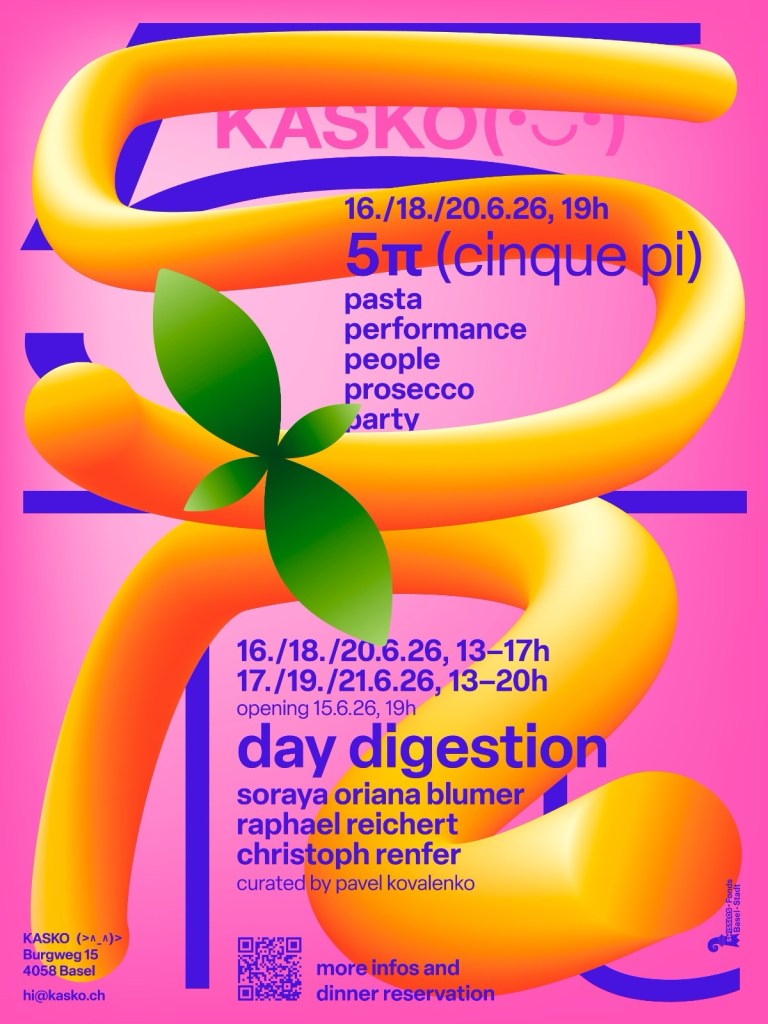
I work with the same tools, but next to this overwhelming extensiveness, the consistency of my work can almost feel like a child’s exercise. His production started back in 2020and is still ongoing. Naturally, I was drawn to showing my own work in dialogue with such an impressive work as „ALL TAG_1948_8“.
I had come to the realization already years ago that it is sometimes quite difficult to find such a well-fitting vis-à-vis for one’s own work.
There are different levels to this – but it’s not only the content or methodology of a work, but also sympathy with the artists that plays a huge role. I think this cannot be stressed enough,
The third of the three works on show in „day digestion“ will be shown by my long-time friend Soraya Oriana Blumer, titled „public viewing“. It also plays with the documentation of one’s immediate surroundings, yet on a much more constricted temporal level, which for now will „only“ be during the timespan of the Basel Art Fair Week, which is coinciding with the duration of our exhibition (June 15–21).
The art fairs and their elitism and exclusivity are something that is especially difficult for young artists to cope with. Soraya’s work will be streaming different snippets from in- and outside of the many main and side fairs of this crazy and somewhat unnecessary, and probably (and hopefully?) already soon obsolete, art happening into our exhibition space.
Alongside your work as an artist, you are also active as an organizer, co-president of an association, and a participant in collaborative projects. How do these different roles influence and shape each other?
As might have become apparent already over the course of this interview, I’m quite eager to reflect on and change artistic production conditions for the better, as I see myself and others struggling a lot with them, even in such a privileged context as we have here in Switzerland.
So it comes naturally to me to use my energy for voluntary work in order to strengthen already existing networks that are there to improve said conditions and also to give something back to my network. In various roles and formats, I have tried to strengthen the position of artists on a micro level.
As another example, I had co-curated a video exhibition format called Foyer42 for a year together with Leah Studinger, because we had felt a lack of opportunities for young video artists in the region.
Additionally, this kind of work can result in influencing and inspiring my own artistic practice, as I actively surround myself and work with art and artists that I appreciate and want to know more about.
bitte warten, which will be shown again as part of AFTER HOURS, was created some time ago. Has your perception of this work changed since its initialproduction? Do you think the same work can acquire new meanings in different contexts?
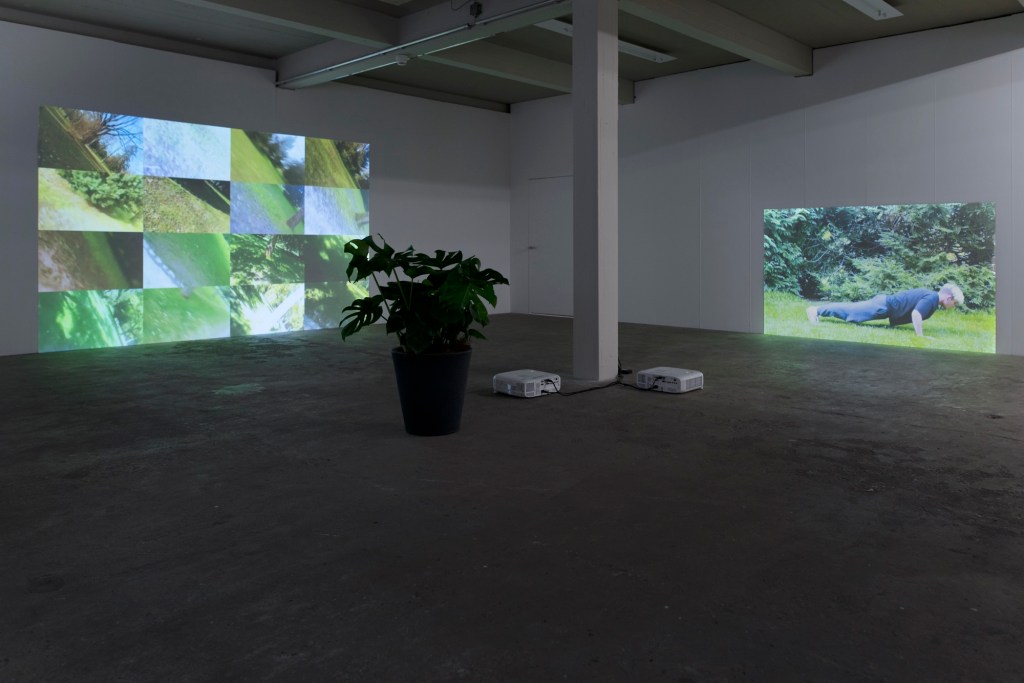
The two-channel video work „bitte warten“, which was produced in collaboration with Leah Studinger, has so far been shown in different contexts every year since its production back in 2023 for a show in Hiltibold, St.Gallen.
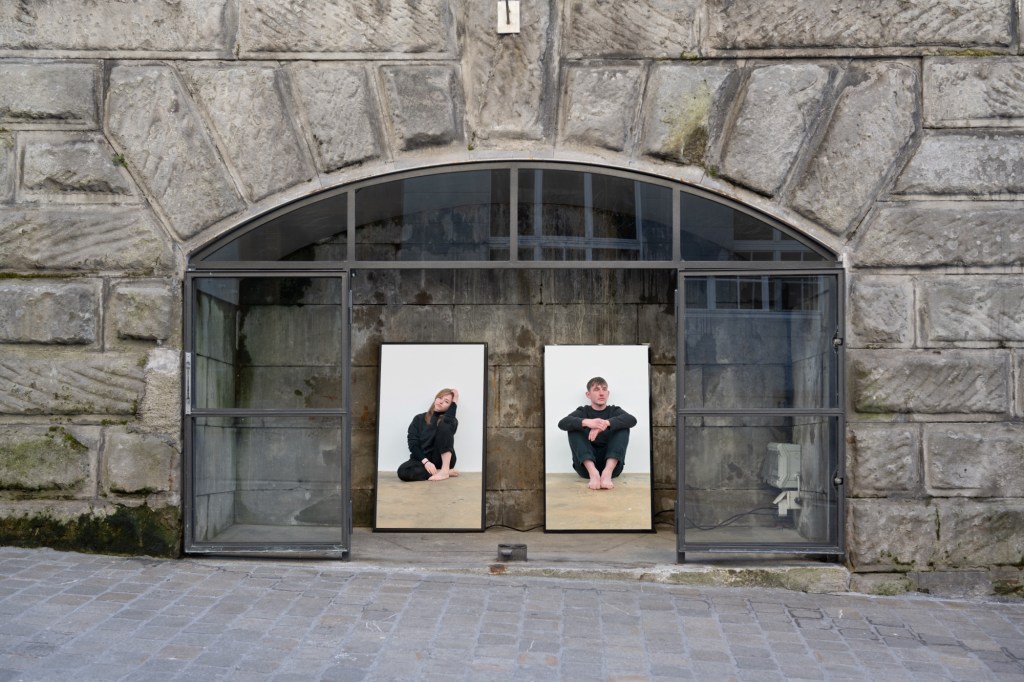
There, our installation could be seen from the street in St.Gallens old town, next to the bar district, around the clock and showed us waiting (for something to happen?).
Funnily enough, in comparison with other joint works, this work has never been submitted by us for a specific open call, but rather got selected by curators who saw it in one of our portfolios. Every curator sees their own connotation with the work in the context of the exhibition it is placed in. The most prominent one was probably back in 2023, when it acted as the eponymous work: the group exhibition at Garage Coop, Strasbourg, was called „bitte warten“.
A work will always change its meaning through the circumstances of its presentation, the other works surrounding it, and the perspective of the audience encountering it. I think this is one of the most interesting aspects of exhibiting – that a work is never completely fixed but keeps shifting depending on where and how it appears.
What did your recent solo exhibition pisspaintings teach you about your own practice? Did the experience of developing a solo exhibition influence the way you work?
The series I show in this exhibition is also titled „pisspaintings“ and is a collection of so far over 200 cellphone photographies I took of different stains I found on the typically neat asphalt of Switzerland over the course of around two years.
The title came to be because I imagined most of these stains being produced by urinating dogs, even though most of them probably aren’t.
The series is a comment on the imperative of self-branding that artists see themselves exposed to, with some doing a better job than others. With this work, I’m reflecting on the probability that dogs (or whatever other authors) are doing a better job at branding me than I could ever be myself – at least visually, as most of my other work can aesthetically be seen as quite eclectic.
These „paintings“ were framed neatly and hung in the setting of Espace Formaline (17 works in 17 small vitrines that are located alongside an extensive pathway between a noise barrier wall and train tracks in the Aargau agglomeration of Suhr, AG).
I’ve realized that through showing this work in different contexts and reaching a diverse audience with different backgrounds, the series has had the ability to act as the criticized imperative itself through the means of humor. People started to think of me whenever they saw one of these funny shapes on the ground and started sending me their own finds.It is the first time I’ve shown „pisspaintings“ in a solo exhibition setting, and I’ve come to the conclusion that this is the ideal way for the work to develop its desired potential.
Otherwise, it loses its function – it has the capacity of mocking other works on show in a group exhibition, which is not the intention behind it.
In theory, I could fill a big hall with this work, as so many of them already exist and are only waiting to be printed, framed, and hung on the wall.
What projects are you currently working on, and what exhibitions or productions can we expect to see from you in the near future?
„pisspaintings“ will probably go on for a few more years. It’s fun and refreshing to work on.
Yet, ever since I’ve finished „reading the news“, I’ve been wanting to break my own record of this so-far longest video work of mine (3:35 hours) and I have shortly after its completion started working on a rather meditative and “anti-algorithmic” work called „decisions“ , a work-in-progress that is so far already 2.5 hours long.
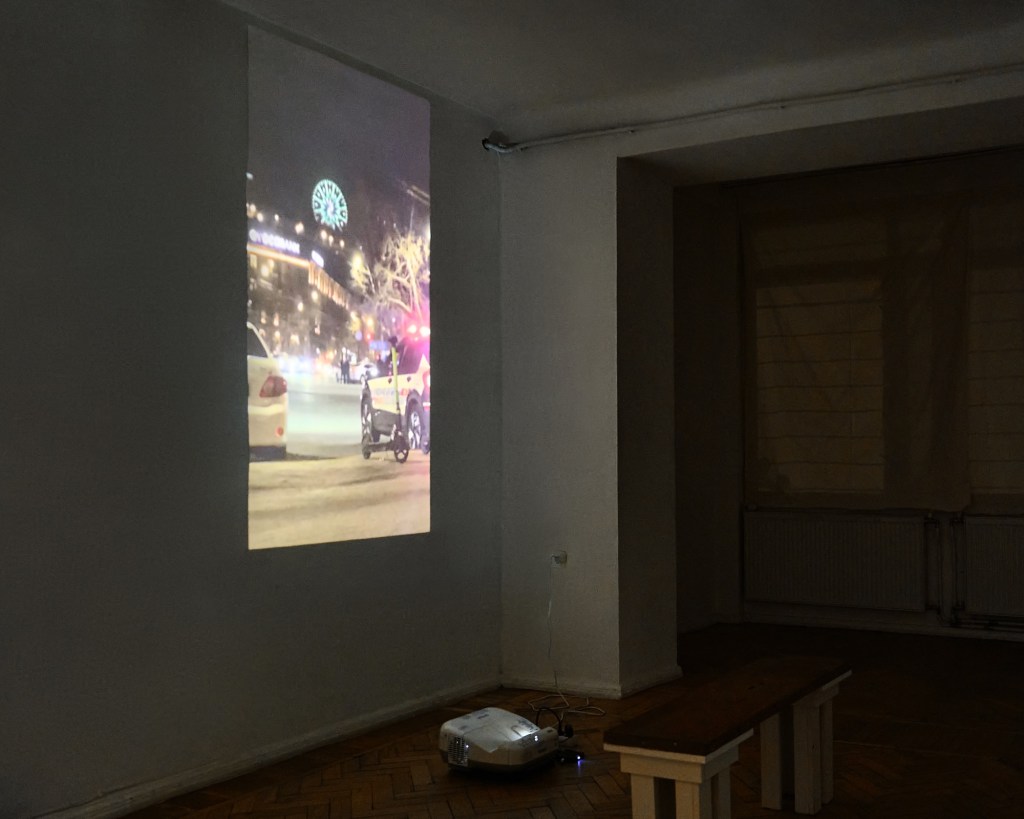
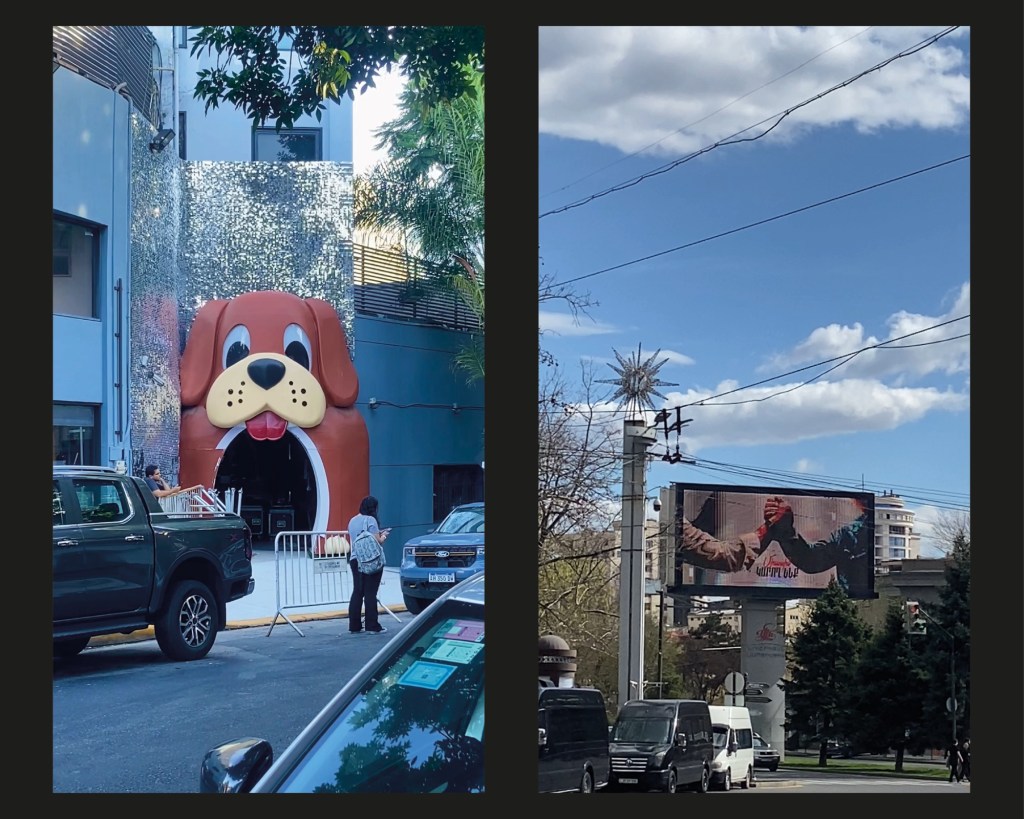
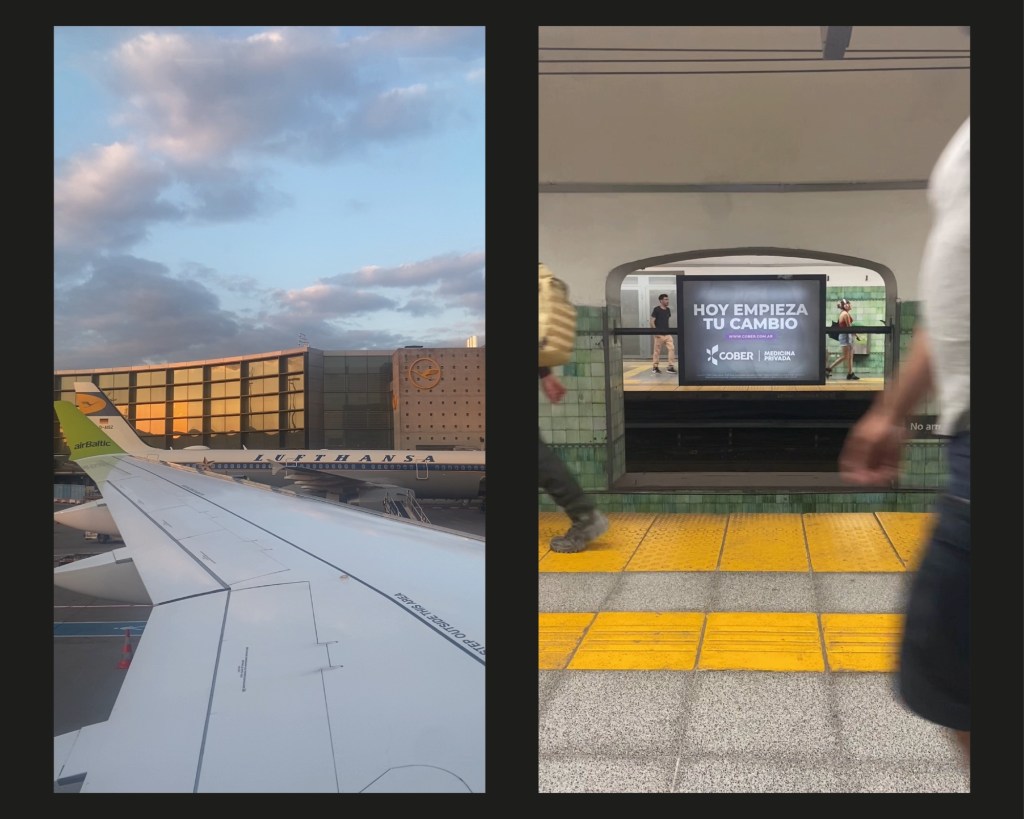
It consists of a compilation of one-minute-long shots (the current maximum length of Instagram stories). These sequences, all static shots that calmly observe my surroundings, are initially uploaded as an Instagram story and then added to a story highlight, which is exactly what the work actually is once it is put on a screen placed in portrait orientation in an exhibition setting: an immense Instagram story highlight deprived of its initial medial context.
I like the duality of these two places of existence: While I lose viewers on Instagram (I can see this phenomenon in the statistics) whenever I upload one of these seemingly too long shots that are unfit for the dopamine-seeking viewer, the work has the ability to attract visitors like moths to a flame in an exhibition setting.
We are all still socialized to have a TV as the center of attention. Its light sucks us in, and this makes us feel at home in some odd way. The art context interestingly allows the work to be perceived as exactly the opposite of where it was first published: it results in an overly welcome rest from the sensory overload we encounter on social media.
Other than that, I’m currently planning my second trip to Armenia this year in order to focus more on my artistic production and other projects to try to take a break from the fast-pacedness of the Basel art world, which will definitely be especially needed after the upcoming Art Week.