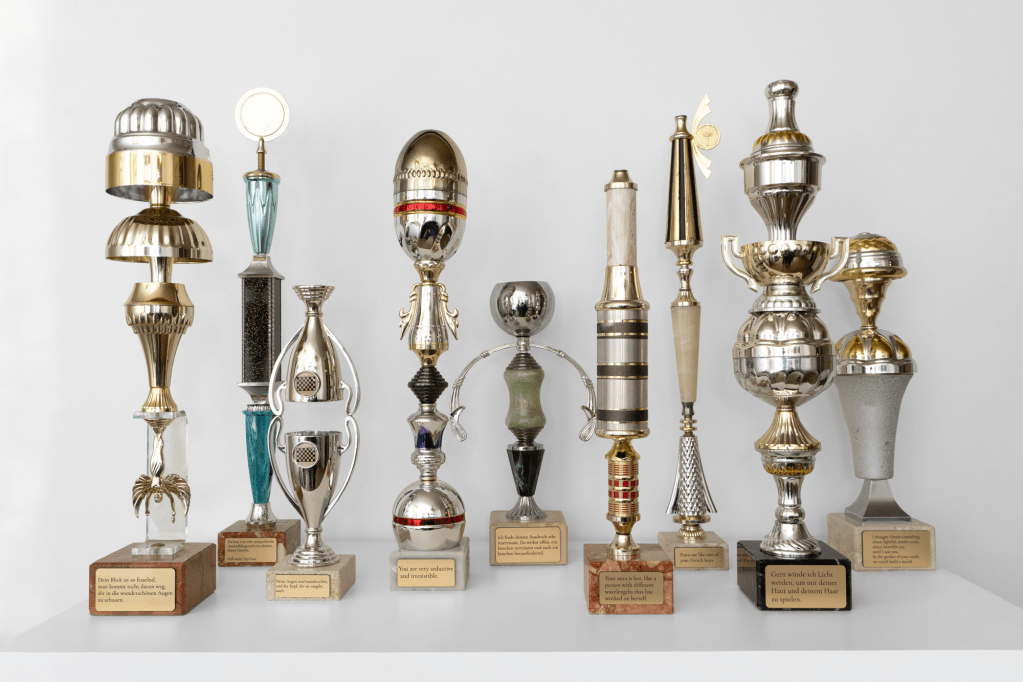
In this conversation, we explore Evelyn Vonesch’s practice, where personal narratives intersect with broader social structures. Moving between material, memory, and perception, her work engages with themes of visibility, absence, and the subtle tensions between the individual and the collective.
Interview; Açelya Dursun
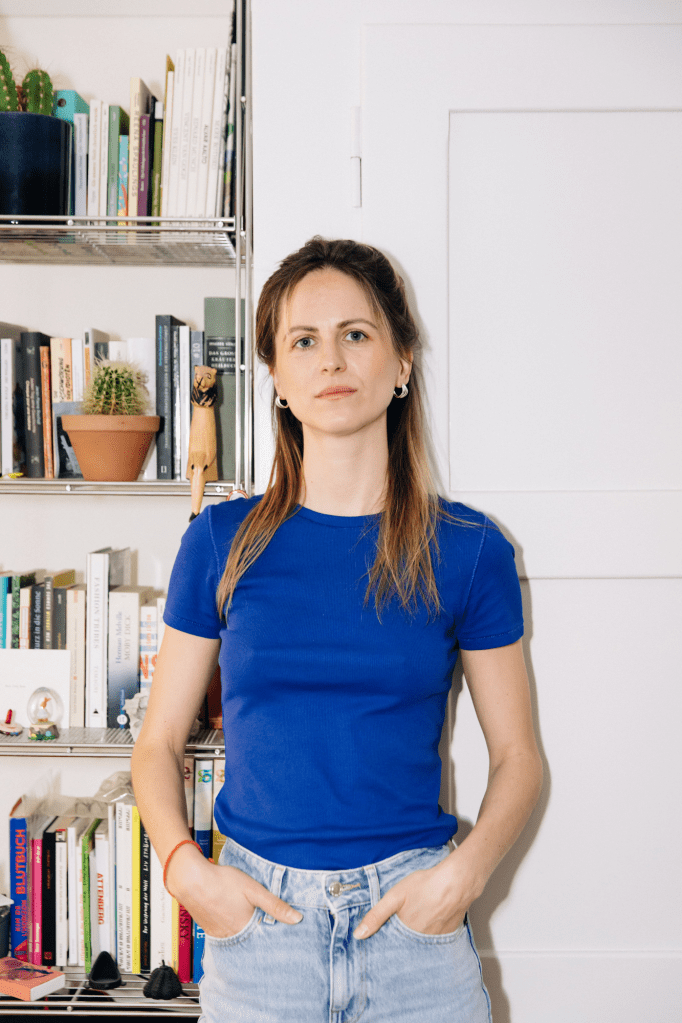
Themes such as repression, visibility, control, and fragility appear consistently throughout your practice. How did this conceptual framework emerge for you, and how has it evolved over time?
The conceptual framework of my practice is shaped by my sensitivity to inner experiences and external influences, informed by personal and familial history. I work with stories that are carried forward over time, through memory or tradition and look at how they continue to shape perception today. My practice focuses on how these stories become visible through the body or in social structures. It is also situated within feminist discourse, exploring collective experiences and self-empowerment, and how femininity is shaped and defined through relations of power.
In your works, unspoken or suppressed emotions often take on physical and material forms. What draws you to translating the internal into something tangible?
I translate internal experiences into material forms to give subtle states presence and weight. Sensitivity guides what I notice, and research, process and material allow these experiences to be articulated in a way that can be shared and physically encountered by others.
There is a subtle tension in your work between personal experience and broader social or structural systems. How do you navigate this relationship within your practice?
I navigate the tension between personal experience and broader social structures by understanding the personal as always already shaped by political and cultural conditions. Working from personal and familial experiences allows me to approach topics from a situated perspective, which I then open up to broader cultural and structural questions by using research and material processes..
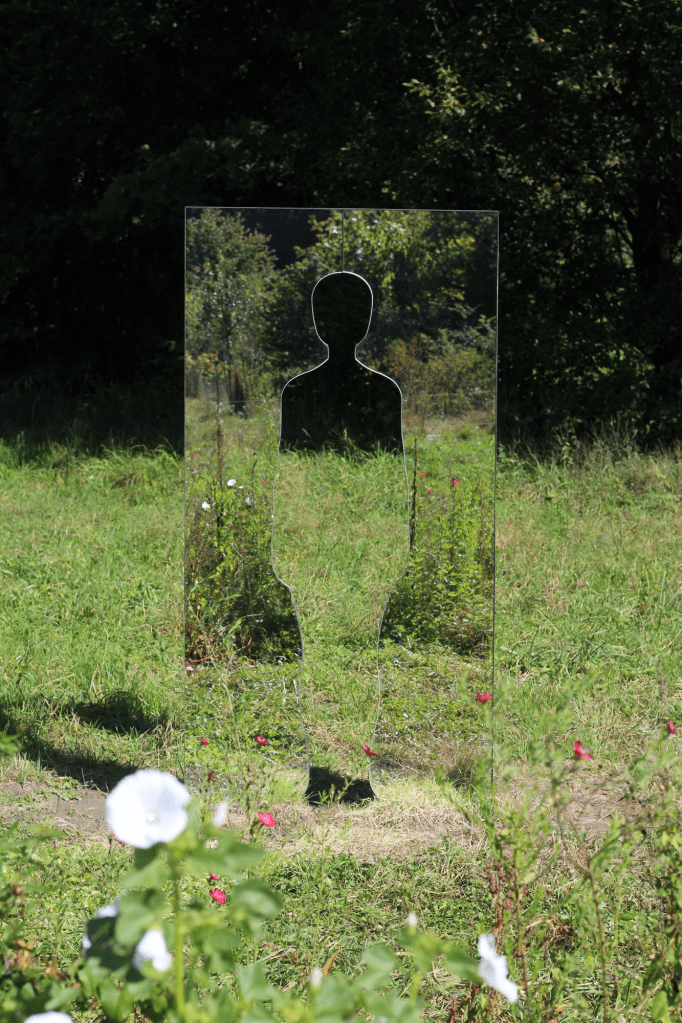
In I’ll Be Your Mirror, the viewer encounters not their own reflection but an absence and what lies beyond it. Do you think the absence of reflection brings the viewer closer to themselves, or does it create a distance from the self?
The absence of a direct reflection in ‘I’ll Be Your Mirror’ invites viewers to perceive themselves through their surroundings, cultivating an inward awareness often neglected when identity is reduced to appearance. This may bring a sense of closeness to aspects of character and relational perception, while also producing distance where self-perception has been shaped primarily by physical appearance.
A sense of absence, withdrawal, or incompleteness appears in different ways across your work. For you, is absence a form of loss, or can it open up space for new meanings to emerge?
I use absence as a form of hyper-presence: what is missing draws attention and amplifies perception. As Tracy Chapman writes in “Telling Stories”, ‘There is fiction in the space between,’ the work remains open to interpretation, allowing viewers to engage with the space in ways shaped by their own experiences and perceptions.
In works where you engage with scale, altering the size of an object can significantly transform perception. What happens to meaning when something is miniaturized or reproduced?
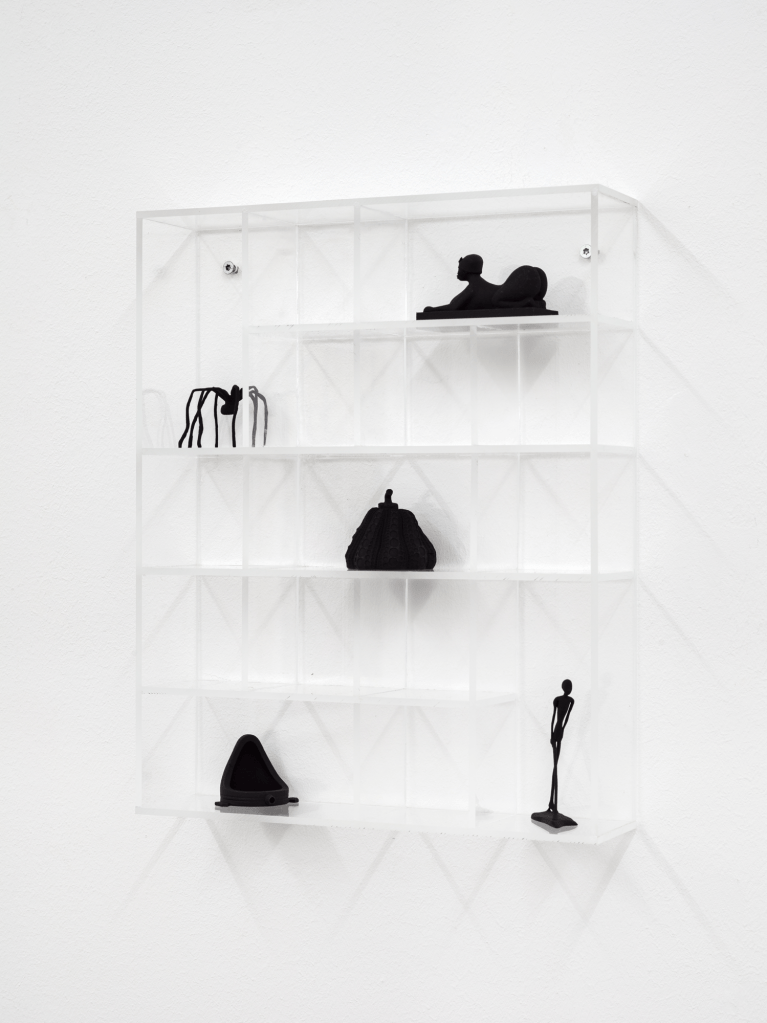
In Put me in your pocket, I translate canonical sculptures into small, 3D- printed miniatures. This shift in scale destabilizes their perceived authority: the monumental becomes familiar, almost casual, prompting questions about value, aura, and the cultural status of these works.
You bring together materials such as glass, steel, tulle, and plastic, often emphasizing their contrasts. Do your material choices begin with a conceptual intention, or do they emerge more intuitively through the process?
My work usually begins with a concept, and materials are chosen in response to it and the research behind it, which is why I work with a wide range of them. I value this diversity, as it allows me to learn about new materials and collaborate with specialists who bring specific knowledge into the process.
zweizimmer is described as a space for collective work, experimentation, and dialogue. How has being part of this structure influenced or reshaped your individual practice?
zweizimmer is a curatorial project that Mara Meier and I founded in 2022. Since then, we have organized exhibitions or performances once a year in changing locations. The idea of the project is to use its “eight walls” to create a space for collective work, experimentation and community-building. zweizimmer’s focus on collective work and its nomadic structure have influenced my practice by encouraging a more process-oriented and context- sensitive approach. The ongoing exchange with other artists has become an important part of how I develop and reflect on my work.
As a curatorial project, zweizimmer seems to blur the boundaries between making and exhibiting. What does this space represent for you beyond a conventional exhibition format?
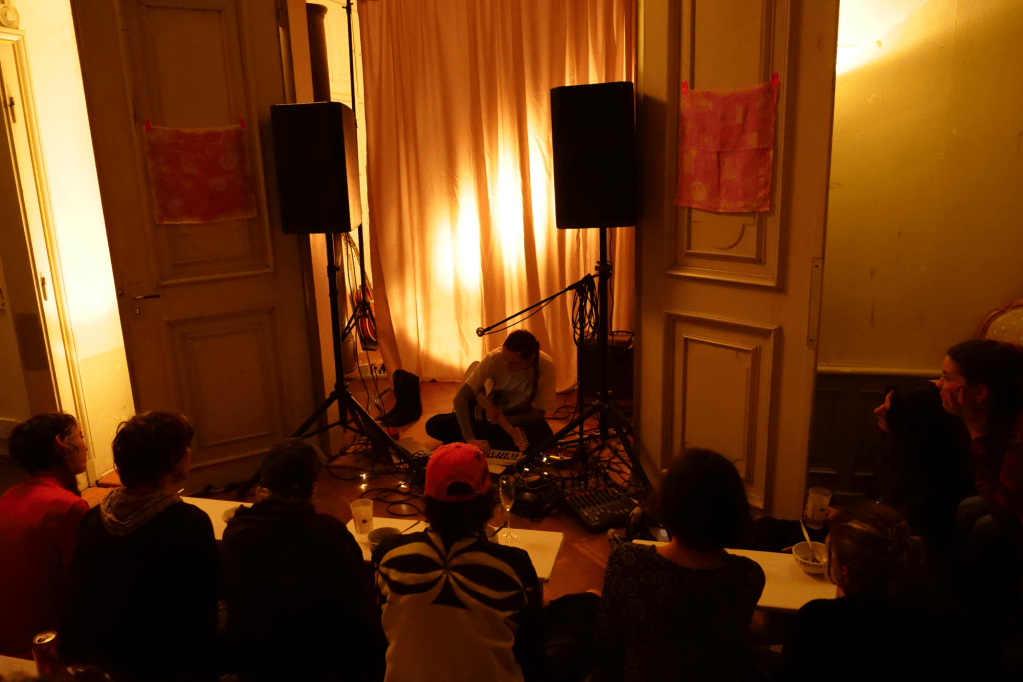
For me, zweizimmer is grounded in friendship. It creates a space of trust and ongoing exchange, where making, spending time together and exhibiting are intertwined, and ideas can develop collectively rather than individually. Beyond the formal aspects of collaboration, it also includes moments of conversation and shared presence that sustain the process. During our last event, we invited the audience on a multisensory journey between the living room and the kitchen in Schwobhaus, Bern. Three sound and performance artists created sonic environments, each inspired by a self-selected dish. Through food and sound, a synesthetic connection between tasting and listening was created.
Could you tell us about what you are currently working on or any upcoming projects? How do you see your practice evolving in the near future?
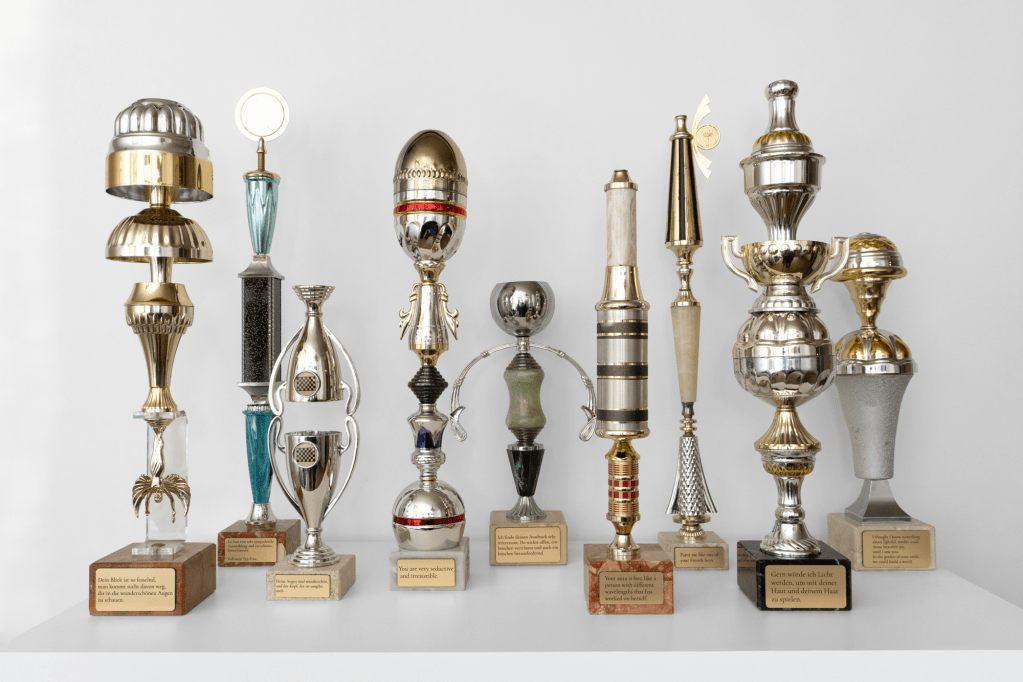
I am currently working on Das Feld, a project that examines the field of shooting culture in Switzerland, focusing on how notions of heroism, collectivity, and tradition are constructed. It looks at how weapons and military logics are embedded in everyday cultural practices and how these systems shape ideas of participation, discipline, and collective identity. I will continue to develop it through research and reading over the coming months before entering a production phase during a residency in Ticino in July. Alongside this, I am continuing to expand Komplimente (ein Archiv) by developing new and larger sculptural works for my solo show at Kunstkasten Winterthur in September. I have also recently joined the board of Visarte Bern, where I will engage more actively in cultural politics and representation.


 ArtMeant* Project