Leman Sevda Darıcıoğlu is a Berlin-based artist whose practice centers on live and durational performance. Working across performance, video, and installation, their work explores the politics of time and death, focusing on the vulnerability, power, and resistance practices of marginalized bodies, particularly queer, migrant, and chronically ill bodies. In this interview, Darıcıoğlu reflects on the relationship between body and performance, the political dimensions of vulnerability, and the questions that shape their current practice.
Enjoy the conversation.
Interview: E. Buket Bal Soezeri
Who is Leman Sevda Darıcıoğlu? Could you talk about their process of relating to art?
The first part of this question could really take a little (!) long to answer, but I suppose my answers below will also amount to an answer to that.
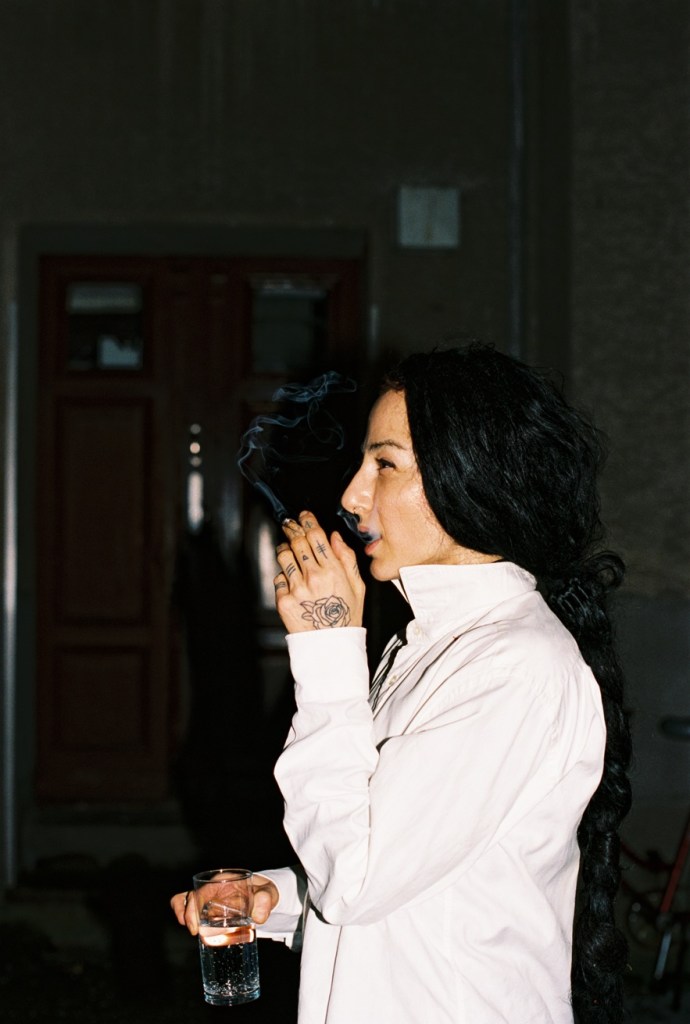
If this question carries a desire for an introduction, then we can begin with the following: I am an artist who has been living in Berlin for the last six years and who mainly produces in the field of (live and durational) performance, while also making video and installation works alongside performance. In a way that takes time and death politics into focus, I am interested in the vulnerability, power, and practices of resistance of marginalized bodies, especially queer, migrant, and ill bodies. I take all these categories as building blocks that constitute the conditions of lived life. It is also important to say that queer is a political perspective in my practice; I am speaking from a horizon opened up by a critical interrogation against the norm, from a new future.
Even though art is a medium through which how and from where I relate to it changes periodically, I can say that my relationship with artistic production is an effort to create meaning out of my existence on this planet.
In your works, the body appears both as a tool and as a site of struggle. How does the idea of the body as a site of struggle create a kind of permeability or boundary between performance and personal limits? On the other hand, does this duality cause a conflict?
Here, with your permission, I will shift the perspective and the frame a little. The body is treated as a site of struggle together with the existence of rigid hierarchical power structures; let us think, for example, about how institutionalized religions have waged a struggle against the body. With modernism, on the other hand, we see a construction: together with colonialism, the modern state establishes the body by classifying it through categories such as race, gender, sexuality, and health, with the aid of sciences such as anthropology, natural science, medicine, and biology. The history of “civilization” is, in other words, the history of a struggle, in some cases against the body, in some cases through the body, in order to render it governable. So it is not I who does this, but macro and micro powers. What I do is look at what I can do with the body, which is itself a site of struggle, and with the effects of the struggle carried out upon it; to investigate its limits and its capacity, so that on the one hand we may know where we are, and on the other hand we may think together about where we can go from here.
To look at the body, which is the primary material of performance in my practice, particularly as a field of inquiry into limits, is a questioning of how we might create a new world.
How does the hegemonic system, engaged in a struggle of governance with the body, affect bodies; what happens to bodies within these effects and exposures; and what are the doors all of this closes and opens, and how can forms of exposure open onto creative and empowering horizons… these are the kinds of questions that pass through this inquiry.
If the duality you mention is the one between the personal and the social, then when we perceive the singular body not as an individual example but as being within an ongoing negotiation of power with the systematically constructed dominant perception of the body, such a duality no longer remains. In other words, the body that performs is my body, but it exists from the point where my personal history intersects with the collective; in my works, things take place within a permeability between I/we.
When we look at your performances, we see that along with physical limits, emotional limits also stretch, perhaps even get tested. Beyond being a form of representation, what does performance mean for you?
My performance methodology is based on investigating the physical, emotional, and mental limits of the body. I would prefer not to call this a test, since the terminology of testing seems to presuppose a relation dynamic with a coercive force, or to suggest that there is some given/coded answer and we are testing that. As someone who makes performances that dwell with impossibility, my works may not be perceived that way, but I am speaking of a path that can only open from within a loving relationship with the body and with life.
Limits, when you go to their shores and remain there, often open onto new paths; sometimes they do not. I am interested in the possibilities there, and most of all in those that can open. The key point is not to wage war with the body and its limits, and even though it can be very difficult, to go up to that point, to the limit, and stay there, remain within it. There are, of course, boundary points where remaining within is not possible and it turns into a war. Then you get to see what impossibility does. This inquiry into limits is a political and philosophical inquiry. And at the same time, of course, it opens onto a personal journey that shows and teaches a great deal about life. I do not usually explain the position of my works or what they are from here, but of course the personal taste of the work comes a little from here too. Performance is a discipline that differs in making this map of the journey public, but I also think that this experiential side of the work is similar for all art forms. If you are doing what you do within a relation to the thing whose action you perform, this may even be valid not only for artistic forms of expression, but for everything.
This is not a war, because the body is not an arena won through victory. To enter into war with limits would be a war doomed to be lost from the outset. If we think of the world as one vast body, we see, through the climate crisis we are living in, that the system waging war against the limits of that body is driving human life toward extinction. In a relationship established from a ground where one looks not to gain victory over the body or defeat it, but to understand what it can and cannot do, the limits of what can be done expand on their own as long as you remain there. Like the energy that, over time, replaces the fatigue produced by a high-cardio or strength-demanding training when you keep attending the training sessions.
As for representation, it is important to state that neither in my performance methodology nor at any point in my practice do I resort to a regime of representation.
What is the idea or tension that occupies you most in your current productions? At what points does this idea intertwine with the connection you establish with queer theory, and how does it affect your performance practice?
I think there have been two fundamental questions from the very beginning: How do we grow stronger from the place where we break, and how do we continue when continuation is impossible? How are we to live, how are we to continue, and how are we to move beyond exposure into active agency? These are the big questions at the beginning of everything. And it is very important to place this here: these are not neutral questions; the place from which I ask them is not “everyone” or “humanity.” I ask these questions from the side of those who live with the risk of death nose to nose, who can lose life at any moment and whose loss is not cared about one bit when it happens. From the side of those toward whom hatred is directed, those who have made it to today almost as if by accident.
And because I believe I can only speak from where I stand, when I speak of vulnerability, power and resistance, I speak from the queer, the migrant and the chronically ill. Because these are the positions I am included in, and in these positions life is lived under the historical and contemporary risk of being lost all at once. And I care to do this neither from within a narrative of victimhood nor heroism.
Here, everywhere is grief; here, everywhere is anger. This is the grief of that which has not been grieved, the anger of the one whose boundaries have been crossed without consent and whose anger has not been given space. How can grief become something that mobilizes without turning into a shrine that closes itself off from the other, and anger without turning into a pit that eats away at itself from within? For some time now I have been asking myself this a great deal.
Queer theory has of course become a vast ocean that has spread throughout the world since its emergence, but if you are asking about the theoretical references of what I am talking about, it is important for me first to remind us that the “Queer Action” group was born in the midst of the HIV/AIDS crisis, and that we are speaking of a theory that comes from a movement with such a history. Judith Butler’s Precarious Life, in which she questions whose lives are grievable after the September 11 attacks; Queer Necropolitics, edited by Jin Haritaworn, Adi Kuntsman, and Silvia Posocco, which questions how norms of race and gender govern the lives of those left outside these norms through normalized politics of death; and Aslı Zengin’s book Violent Intimacies (Şedit Yakınlıklar), which will soon also meet readers in Turkish and which is written on the resistance practices of the trans community in Turkey against cis-heteronormative everyday violence, are the first examples that come to my mind. Alongside these, I would also like to mention at this point the video work titled “Hüzün diye travesti ismi var” by the late dear Nihat Karataşlı, who is no longer with us today. Nihat’s video with the dear Gani Met, one of the founders of Pembe Hayat and someone who contributed greatly to the trans movement in Turkey, whom we lost in 2024, can be accessed here.
I feel as though I have already answered the connection of my performance practice with these things in my previous answers; I hope that is the case.
In your 2020 performance titled White Roses, Pink Glitters, the body is positioned both as a space of mourning and as a surface of resistance. Through this performance, remembering Zak Kostopoulos signifies both remembrance and mourning, while also symbolizing a political resistance. What kind of rupture or space did this performance create in your practice?
Grief and resistance have long been intertwined in many of my works. White Roses, Pink Glitters was the work in which I asked myself for the first time how I might create an image of fragility that would be hard to overlook without falling into the trap of aestheticizing a political statement. In a sense, for the first time I wanted to create an image that was “beautiful,” and impossible to miss because of its beauty. I decided to mark the vulnerability and strength of queer existence with glitter, through Zak’s Instagram post I came across: “If I disappear one day, follow the glitter.” Drawing on Forensic Architecture’s video work investigating Zak’s death, I covered my body with pink glitter (also taking the pink from the pink triangle of Nazi Germany) and placed myself on a table in the position in which Zak lost their life. The glitter made my heartbeat visible through my artery, and at the moment I ended the performance and moved, it spread with me into the space and likely onto the viewers who passed through that room and the places I moved through after me.
Let me also leave a note here for the interested reader that a text by dear Aslı Zengin, in which she reads White Roses, Pink Glitters and Yüküm Ruheşimdir through the contagiousness of glitter, will meet readers in the March issue of Sanat Dünyamız.
Your 2019 performance ‘Her Yanı Suyla Çevrili/Surrounded by water’ which you carried out in London, is quite striking. (Movements that strain the body and are repeated…) In this sense, can we define this performance as a ritual? For you, is ritual healing, or is it a space that accepts that healing is not possible? At the basis of the idea that turns performance into a ritual, what kind of feeling is there?
The connection between performance art and ritual goes back to the times when performance art was being established as a discipline. After moving to Berlin, I have been following a path that brings ritualism together with archival or historical rational knowledge-production inquiries, which are more familiar to Western thought, but of course the performance you mention dates from the time when I was still living in Istanbul and had not yet begun this research. There, it was in dialogue with the ritualism within the historicity of performance art.
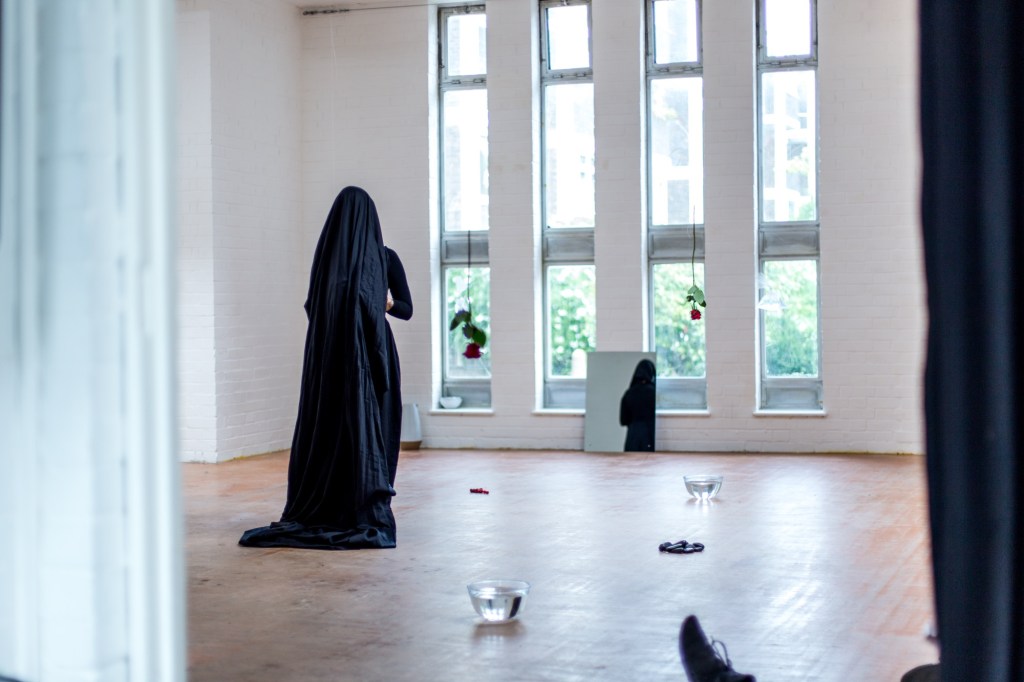
Speaking more generally, I think healing is not a destination, but the path itself. That would mean not a search for a past time before the wound existed, but rather a lifelong path woven through healing with all the scabs and traces left by the wound, and from there seeking to come together with one another and to be good for one another.
Performance and all forms of art may have a healing power, again not as a destination, but as part of the path. I think the possibility of this healing becomes possible through touching ghosts, that is, those who have left among us but whose due remains on the ground, and touching those pains.
Your work İBNE is very powerful. In addition to the discriminatory and derogatory meaning the word carries, the wall on which you presented the work gives the piece a distinct critical direction and dimension. By reclaiming this word, used for humiliation and insult, in public space, you carry out an important movement of ‘reversing language/meaning.’ In this sense, what would you like to say both about the work and about this discriminatory language?
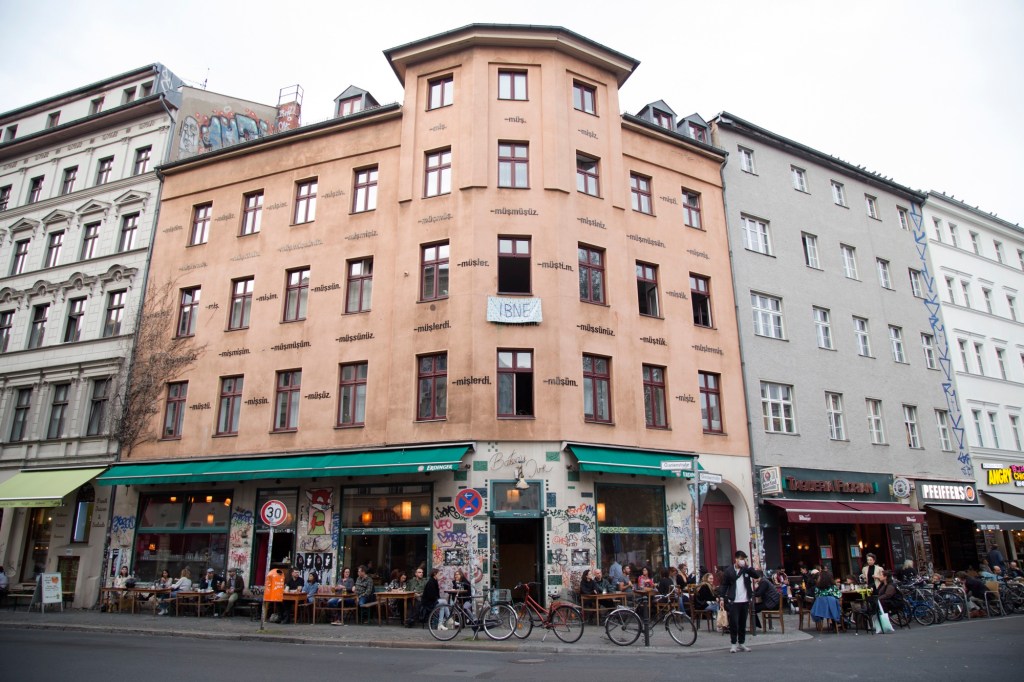
Within the experience of hearing ibne used as an insult many times a day in the streets of Kreuzberg, İBNE emerged from a desire to remind both myself and others like me -whose blood pressure rises every time they hear it but who, because of the possibility of being subjected to violence, continue on their way with their nerves shot- of our power. In Turkey, for more than a decade, we have been speaking of a term that, in slogans such as “The world would move if faggots/transvestites were free,” we have reclaimed publicly as lubunyas, and in this way abolished its derogatory force. To write it with a material like nazar beads, which especially the Southwest Asian eye would immediately catch, was a way of making us feel good and in a sense making a protective totem; and at the same time, of saying to those who use ibne as an insult: with that insult you keep on the tip of your tongue, that is, with your hatred, you will not be able to destroy us. We have existed for as long as floral printed cotton has existed; we were not finished by your hatred, and we will not be finished. With Jean Paul, who lived in the building, opening his home, İBNE was stretched onto the “Am Haus” building for one month one afternoon. As it happened, the owners of the business called Bateau Ivre on the ground floor of the building were Turkish-Germans, and when the long dialogue between us the next day eventually turned into an implicit threat against the person who had opened their house for the work, it came down after staying only one day. As a work of public intervention, we can say that it very quickly “did its job.” A lubunya karma, perhaps; the business that had been operating in that building for a long time closed after a while.
We see İBNE on the exterior façade of the building where Ayşe Erkmen’s work Am Haus is located. What kind of critique is involved in your work being placed on Am Haus?
Am Haus is a very powerful work that has become one of the symbols of migration between Turkey and Germany, and to my mind an important part of its strength comes from having established a relationship, within everyday life, with the subjects of the context it addresses, and from becoming part of the neighborhood today through this relationship. I am speaking of the fact that it was designed at the time as a temporary public installation, but remained because the local people wanted it to remain. This can only be achieved by a work that can step out of the spiral we know so well, in which art often refers only to itself and cannot mean anything for a viewer from outside that field, that is, by a work that can resonate with life.
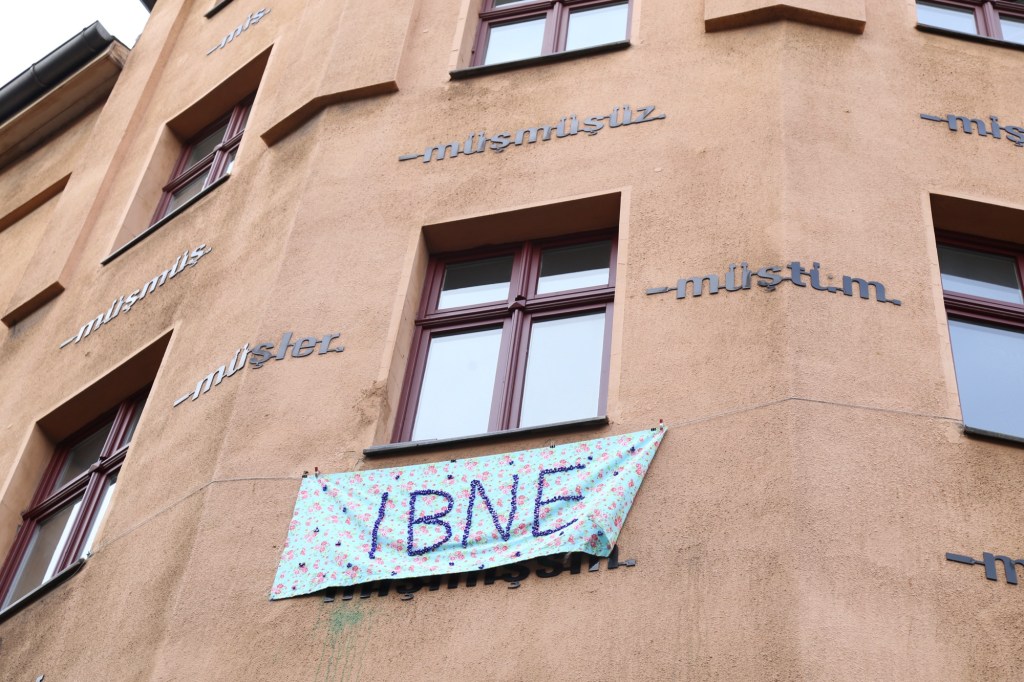
As a temporary guest on Am Haus, İBNE both recalled the rainbow flag hung every year on “Tünel’e Heykel” during the Istanbul Pride marches, when until about ten years ago we joyfully filled İstiklal Avenue, and on the other hand helped me point to the way LGBTİ+ existence becomes an object of gossip, since forms like “-mişler,” “-muşlar” are also used when speaking behind someone’s back.
On the Berlin–Istanbul line and specifically in relation to the themes you examine and critique, what are, for you, the most fragile and the strongest sides of queer visibility in the context of diaspora?
If I am to speak from the context of diaspora or migration, I think that the effort to make art and produce one’s word without feeding the monster strengthens us and makes us fragile at the same time, at a moment when, within the Western-centered art market, the only path open to artists from outside the West seems to be that of becoming a token, that is, creating an image of victimhood through which the Western subject absolves itself. To accept that translation is impossible, that experiences cannot be fully translated from the cultures they come from into other cultures, that the differences in what we have lived and in our histories will always create a gap between us, is easy to say, but while living it, finding one’s compass within that is not quite so easy. It has become increasingly important for me not to enter into the effort to close this gap in an endless attempt at self-explanation, a gap that can never be fully closed, both personally and within the Western-monopolized art field.
And within this, I think that continuing with the desire to multiply, to see and hear one another, without falling into an ambition to rise through a self-consuming anger that does not see the one beside it while making art through intersecting desires, or into a solitude offended by everything, or into a victim story, is again what makes us fragile, and what gives us our strength when we can come together through that fragility.
What are your current and upcoming projects? Do you currently have an ongoing exhibition, or a performance you have realized / will realize?
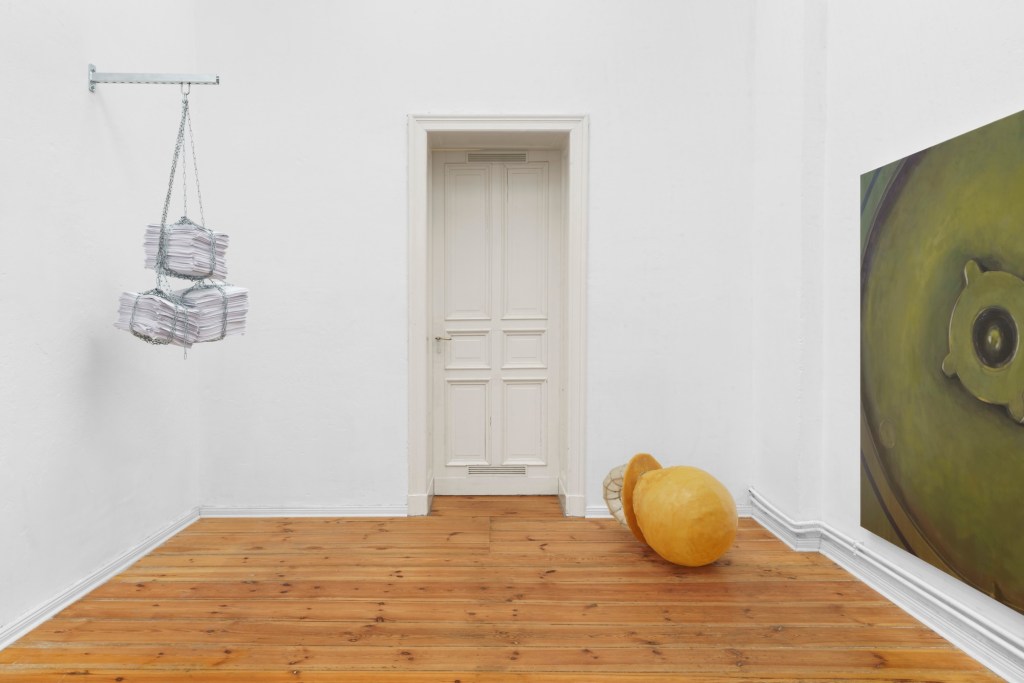
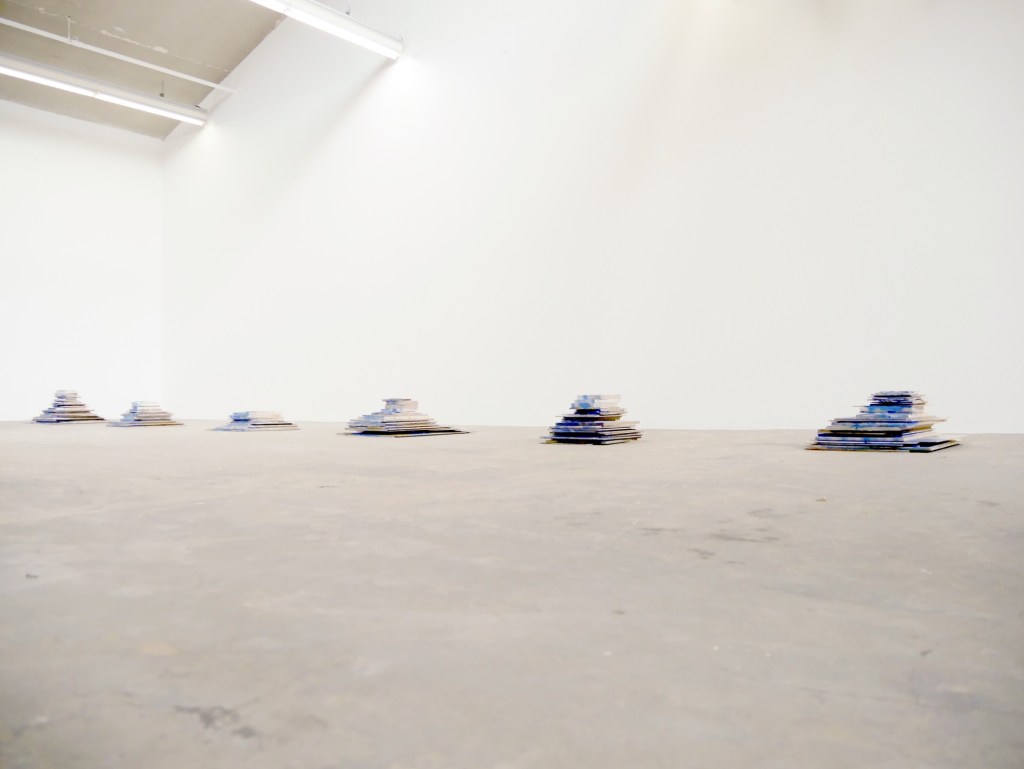
At the moment I am showing an installation titled a light body (of work) in Turnings of Late, curated by Yanne Horas at Hours Space, together with Tanya V. Abelson and Julija Zaharijević, which runs until March 20. This is a new work in which my research into death politics expands in Germany toward the context of migration and bodies living with chronic illness. In this work, where I exercise the right to opacity in the footsteps of Édouard Glissant, I hang in the exhibition space medical reports, financial requirements, and laws/bureaucracy regulating the migrant body living with chronic illness as three separate (though at times intermingling) stacks of documents.
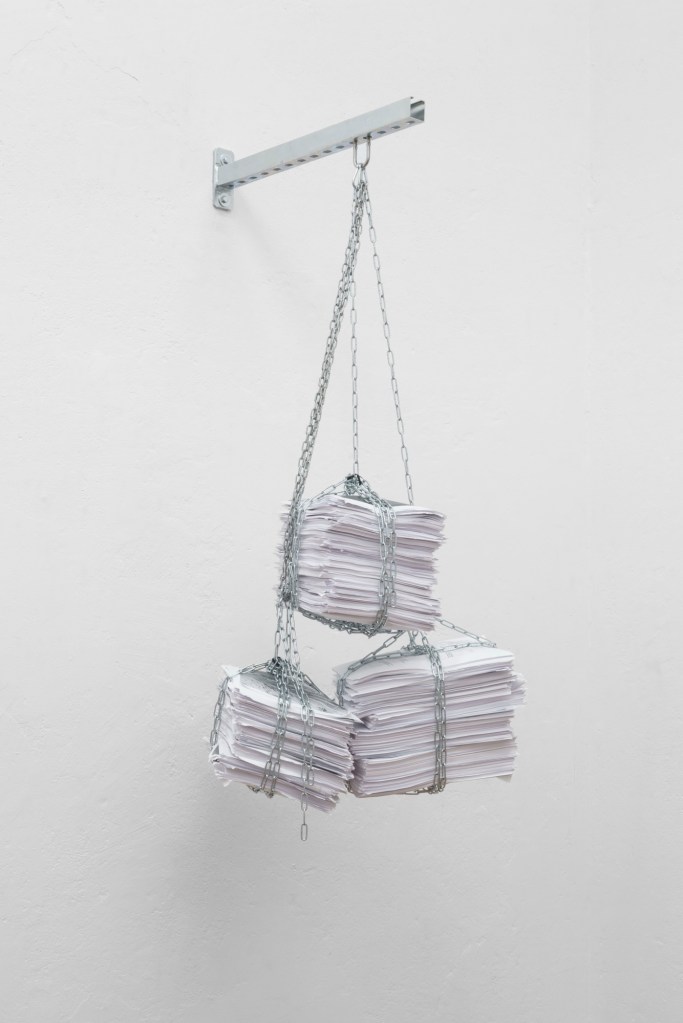
In one of them, the stack of documents I have submitted to the immigration office since arriving in Germany gets mixed with cemetery regulations and the forms required for a dead body to return to its country; one is made up of my hospital and laboratory documents; and in another, both the cost of my survival, health insurance fees, the costs of procedures carried out in hospitals and imaging centers over the last six years and the economy of death come together, from the cost of body transfer to breakdowns of grave plots and ceremony expenses in different districts. I am saying these things here; however, in the space the three stacks of documents are exhibited wrapped in chains, not showing what is inside, revealing only their first pages.
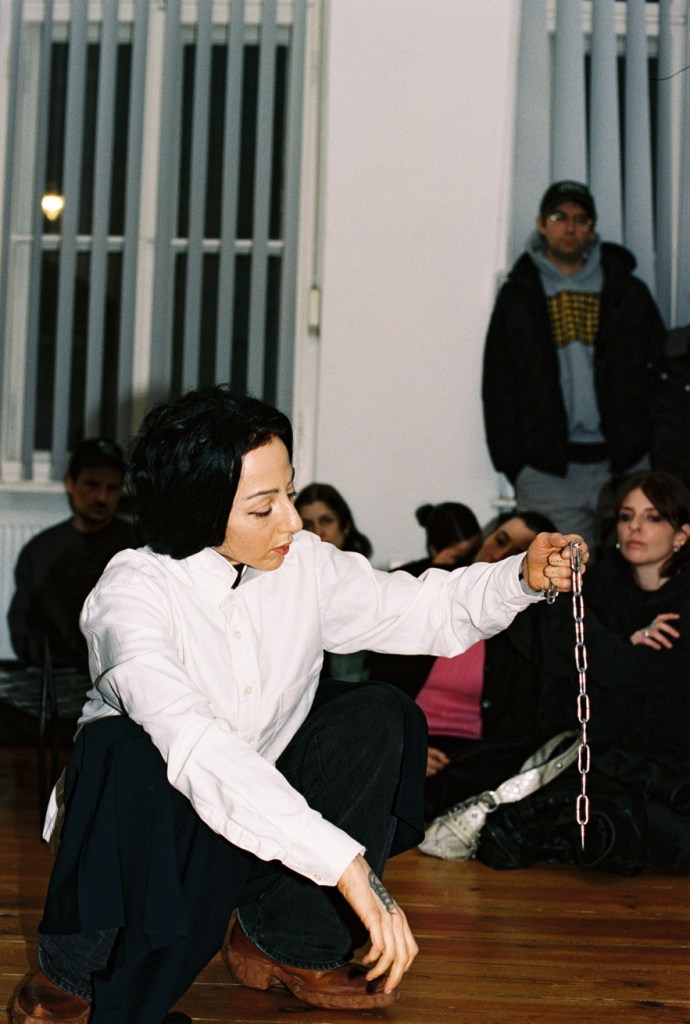
Alongside this, in my performance Scales, of which I made a 15-minute beginning on the opening evening of February 6, I lived in the space for 48 hours with a 33-piece chain that fit into my palm, and shared 6 hours of each day with the audience.
Between March 21 and April 12, I will present for the first time the outcomes of my long-term research of recent years, focusing on forms of resistance shaped by grief, in my solo exhibition Resisting in Grief at Neun Kelche, Berlin, as a video work and a 7-day performance.
Then, between April 17 and May 25, I will carry this project to Mouches Volantes, Cologne, where it will be presented as a solo exhibition titled Mourning in Laughters, curated by Mehveş Ungan, this time with prints added.


 ArtMeant* Project