Revisited Interview
Editor’s Note:
This interview was first conducted on April 12, 2023 for Artnivo.com. Over time, in order to also share the artist’s current works, the final question was added later. In this form, the text preserves its existence as a record of its own period while also being re-presented to the reader, approximately three years later, with an update that extends to the present.
For the first and Turkish version of the interview, Artnivo.com can be visited.
Interview:Buket Bal Soezeri
Since 1994, with her productions both in Turkey and abroad, Gül Ilgaz is one of the first names that comes to mind when contemporary art in Turkey is mentioned. With her works, she touches upon the fragilities in the personal lives of her audience, what they have taken offense at, what they have turned their backs on, what they have criticized, and even perhaps their traumas; with her own memories; with her inner experiences, she probes our personal and collective subconscious, and in this way, she is an artist who never compromises her sincerity.
With the artist, we talked about her works that have come from the 1990s to the present by turning back and often take a personal memory as a reference in their own context; how these productions meet with the viewer on a common ground through the aspects reflected to the audience; and the production processes of her works that are mainly shaped around the themes of “identity, gender, the traces created by life, inner conflicts, emotional states, memory and the city.”
I know that you decided to study painting as a result of being influenced by your circle of friends and the atmosphere of France during your language education there. After returning from France, you prepared for the exams of the Academy of Fine Arts and received painting education at Mimar Sinan Fine Arts Academy. What did the Academy contribute to you in your artistic life that you started with painting? How did painting evolve into photography, video and installation?
The most productive year of the Academy was the first year in which we received Basic Art education, afterwards I continued my education in the studios of Özdemir Altan and Devrim Erbil. In addition to the school, I also received education from Mehmet Güleryüz. In the final year, I participated in conceptual art studies and these studies continued for 3-4 years. Thus, I gained the practice of working with new media outside of traditional material in art. Afterwards; at the beginning of the 2000s, by separating from these studies, we realized the exhibitions Yerli Malı, Yurttan Sesler and Aileye Mahsustur with the participation of the artists of that period. Together with these exhibitions, photography, video and installation began to take place within my practice of working.
Your productions are shaped around various concepts that affect everyone such as social norms, gender, migration. However, although the subject is a known issue that most people have witnessed/are familiar with, your point of departure contains a very personal memory that belongs to you. From this point, the viewer sometimes establishes a connection with the work through a resentment or happiness that belongs to themselves; through the memories you evoke in that moment. For this reason, I see that the most fundamental feature of your productions is sincerity. At this point, how do you begin to work when realizing a production? In your working process, to what point does the bond you re-establish with your own past carry you emotionally and intellectually?
For all of us, the most unquestionable knowledge is the knowledge that comes from the points where life touches us. It is personal, and at the same time it is our reality. I act through the effect of the atmosphere I live in on myself; that is, I give my attention to the moment I live in. This can sometimes be the family environment, sometimes the impositions of the society I live in, and sometimes a situation that surrounds the whole world. These interactions are naturally not experienced only by me, many people who encounter similar situations experience similar experiences. Thus, the works are able to communicate with the viewer at that rate and meet in a common feeling. Rather than differences, what interests me is to be able to meet on a common ground brought by being human. Starting from the feeling of the experienced situation and then accompanied by the question of how I can transform this into a visual language, I set out on a journey in my mind regarding through which images or which metaphors the translation of this feeling can be achieved. What kind of material will be used; whether this will be a photograph, a video or a spatial installation becomes clear during that mental journey. I can say that the path that starts with feeling transforms into a mental process, matures together with the practice of making, and concludes. In the process of doing and making, the work produced as a result of many researches, trials and abandonments reaches its final state. Of course, it is then completed with the participation of the viewer and their re-making it in their own inner world.
The materials you use in your works have a separate connection with the works you produce, and I think this enables the viewer to internalize the work. Sound, photography, canvas, tulle… what is the relationship between your choice of these materials and the content of your work, and what is their contribution to your production language?
During conceptual art studies, I was producing works aimed at questioning the canvas and the canvas as a three-dimensional object. The canvas is also a material that connects me to art history. Ultimately, the canvas is also a cloth or a fabric. Tulle, on the other hand, is both a fabric and, with its permeability and lightness, a material that has its own feeling, and in this respect, it has the quality of being a suitable material for the emotion or thought I want to concretize. Curtains also always attract my attention, they take place in my world of meaning metaphorically; on the one hand they are attached to somewhere, on the other hand they fly – they sway. Curtains have draperies and those folds connect me to the first years of the Academy and to the art of painting. Curtains do not exist without windows, each window is also a frame; it separates the outside from the inside, opens to the outside or closes inward. That is, they contain different moods within themselves. These images sometimes constitute the material of my works as photographs, and sometimes as a spatial arrangement. As for sound, as an element that I have used from time to time in my works since my first exhibitions, in my early works it took place as an element that completed or supported the visual. However, in the exhibition “Bir Anlık Yokluk” exhibited at Galerist, which I most recently participated in, my own sound recording that I made while my father’s house was being emptied was positioned in the space without anything else.
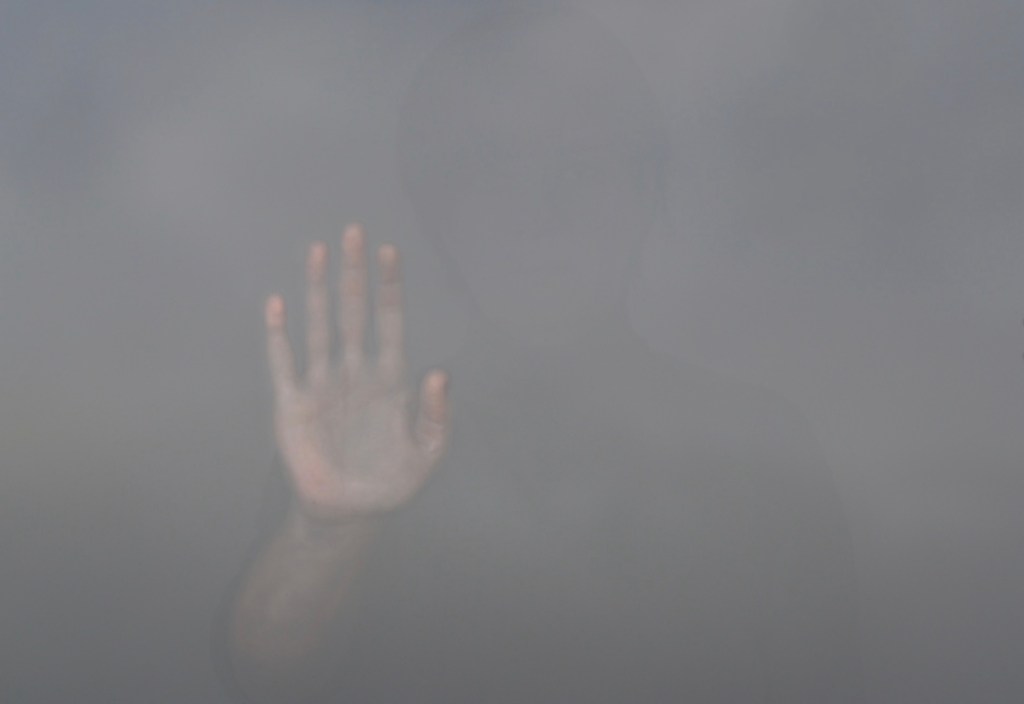
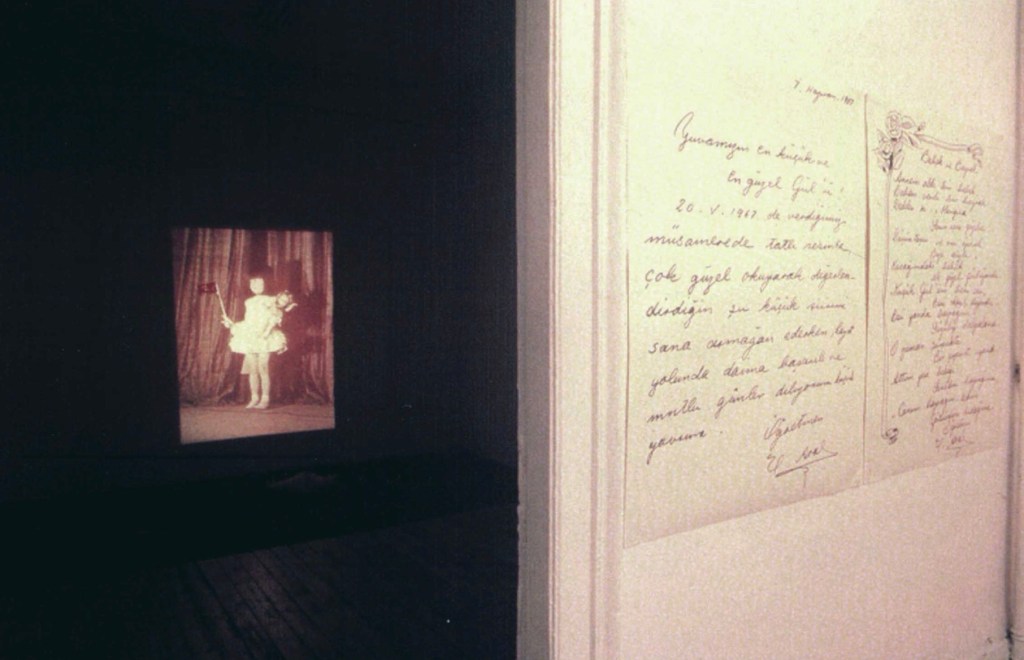
Your work titled “Bebek ve Bayrak” that we saw in the Yerli Malı exhibition in 2000 is a work in which you look at your own life, but at the same time it makes an important critique of what kind of effect social norms leave on us. This work, which contains a strong critique in the context of authority and society through a memory from your childhood, has a canonical structure that maintains its relevance in every period. What would you say about the relationship your productions establish with society in different periods and in different forms?
At the time when I realized the work titled Bebek ve Bayrak, I was working on the processed states and impositions of society on us, it was a period when I was trying to sort these out from my own life. Perhaps our processed states may be different today, but they still exist and continue. In fact, I wish these issues had lost their relevance and my work had remained in the past. Because the fact that these situations still maintain their relevance becomes an indication that we have not made any progress.
There are many productions in different branches of art that reference important works in art history. I think this multiplies the meaning of the artwork and establishes an important connection between the past and the present at a certain point. There are also important works that you reference in your works. What do you think about establishing a connection between the contemporary and the past through paintings we are familiar with from art history?
We received a strong Art History education at the Academy, we examined master artists with admiration, whether classical or contemporary. Therefore, these works always take place in a corner of my mind. In some of my works, if they find the opportunity, they slip into my works, this happens on an associative plane and by helping me in my search for meaning, they add a new layer to the work. The multi-layered nature of my works is already an element that I prefer.
How does working collectively, living and producing with this consciousness benefit the artist?
Especially at the beginning of my art life, I was involved in many collective works. Being together and producing enriches an artist very much. Sharing ideas, reading together, criticizing each other’s works and acting together becomes extremely nourishing.
Turkey, with its socio-cultural structure, economic situation and all its remaining dynamics, has a generally variable and tense structure. This structure contains many problems that the artist can take as an issue. But must the artist always take on an issue or criticize something? To what extent does the lack of a strong conceptual ground in a production affect the bond established with it and its issue?
The artist is a person who has a certain problematic. Even if there is no problem, they are the one who creates problems for themselves and creates issues. In this respect, they overlap with scientists. Scientists also first create the problem and then try to find a solution to it. An artist can take a philosophical, scientific, technological, social or personal subject as a concern and realize their productions around it. Artists are witnesses of the age they live in and by transforming the problematics of the age, they convey them to us through a visual, conceptual or auditory language, they underline situations, they do not have to find solutions. They reflect the aura of the age lived.
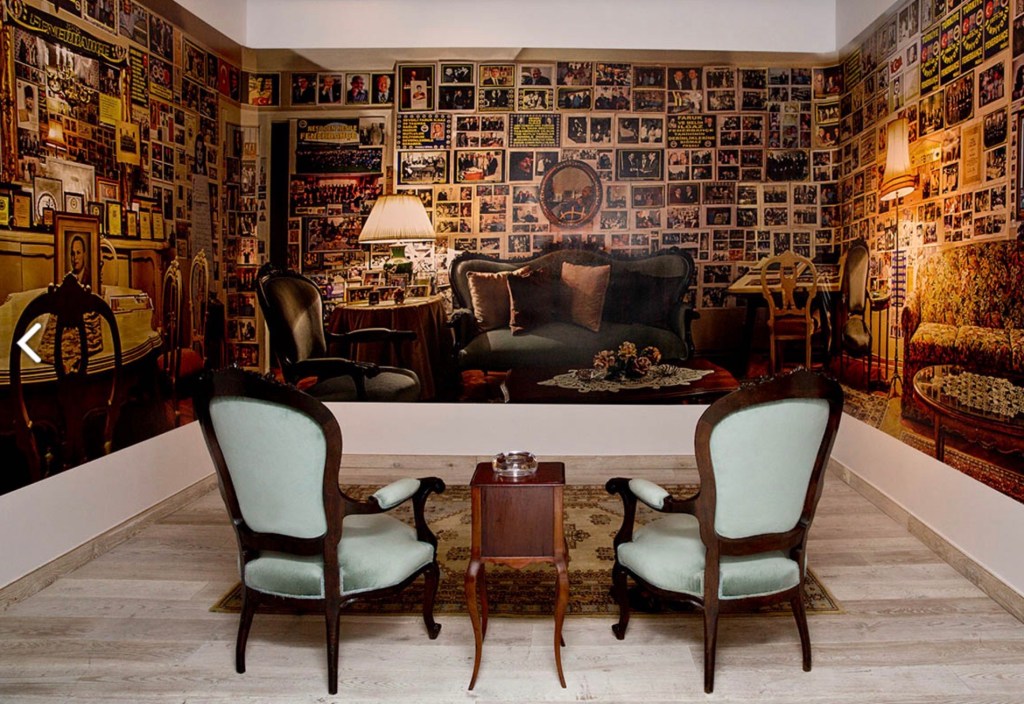
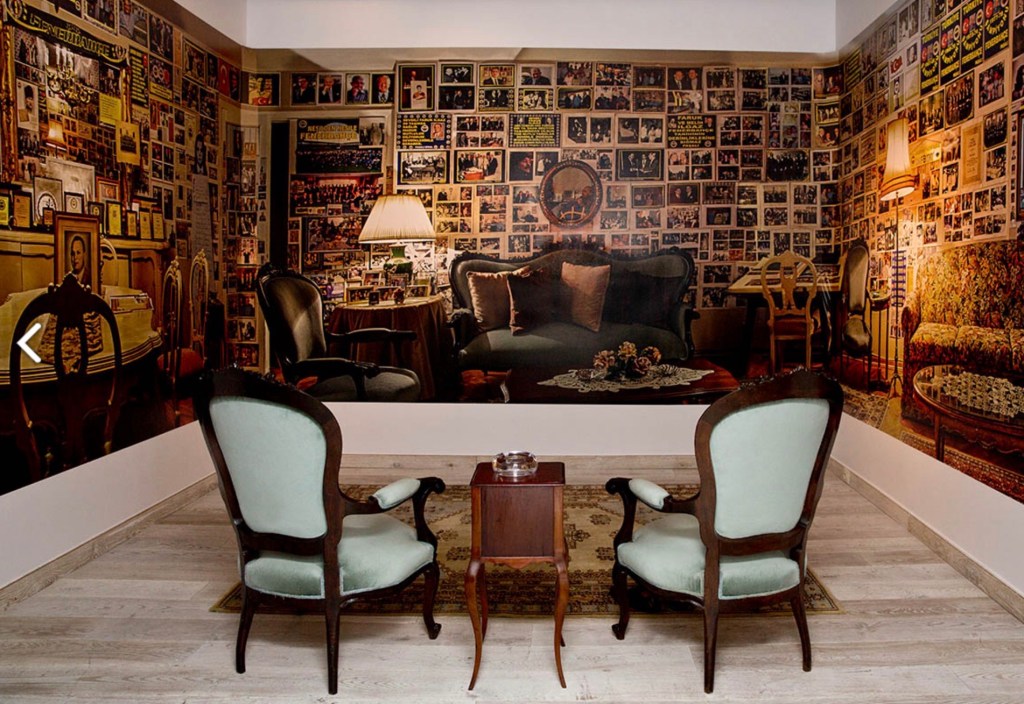
In your installation “Babamın Evi”, we see the wall on which your father placed your family photographs. If we look at this wall in its own reality, it is an installation, but your father is not an artist. Your father, in this story, is what you call an Intermediate Path. I know that you collect Intermediate Paths and Main Paths; that is, people who do not produce in order to be artists, and that you meet these people. How did the idea of turning these encounters into a project emerge?
As you mentioned, when my father started to spend more time at home after a certain age, he covered all the walls of the living room of the house with photographs, there were also newspaper clippings and writings in between. Although my father had not received any art education, he had made a photo-installation that put many artists to shame. He would tell the photographs and their stories to those who came to visit him and would almost relive those moments. Doing this was very good for him and connected him to life. Later, I met Cuma in Bodrum, although he had not received education and did not call himself an artist, he was making extraordinary sculptures from branches and logs, he had created a sculpture field by exhibiting them in a large area. The attitude of both my father and Cuma pushed me to research others who produce with a purely inner impulse. In this context, I met nearly twenty people working in this manner and prepared a booklet in which I recorded their stories. What interested me here was the unstoppable urge to make art. All of them freely produce works of extraordinary creativity without expectation, far from the institutions of art such as gallery, audience, collector, etc., they were producing only. “What makes an artist, an artist?” became a question that I opened to discussion through this project.
In the exhibition “Bir Anlık Yokluk” curated by Ela Atakan at Galerist, you took part together with Burçak Bingöl, Sophie Calle and Ayça Telgeren. How did this exhibition come about? And are there other projects waiting for us in the coming days?
For more than a year, we have been working with Ela Atakan on a personal exhibition project. Due to the cancellation of an exhibition of Galerist in February-March, upon contacting Ela Atakan, the exhibition “Bir Anlık Yokluk”, consisting of 4 female artists, came to the agenda. After an intense period of work, this exhibition, which is in a fluid relationship with each other, emerged. In this exhibition, I participated with a video work titled “Fırtına”, 3 digital print photographic works, and also with a sound recording in which I described the states of the house with the furniture in the space while we were emptying the house where my childhood and youth years passed, and the lives that had passed in that house. These days the exhibition has just ended, however, the general structure of my personal exhibition that I have been working on since last year is ready, I am thinking of realizing this exhibition in the upcoming period.
Around which projects is your production currently taking shape? Can you talk about the works you have recently realized and those you are planning in the upcoming period?
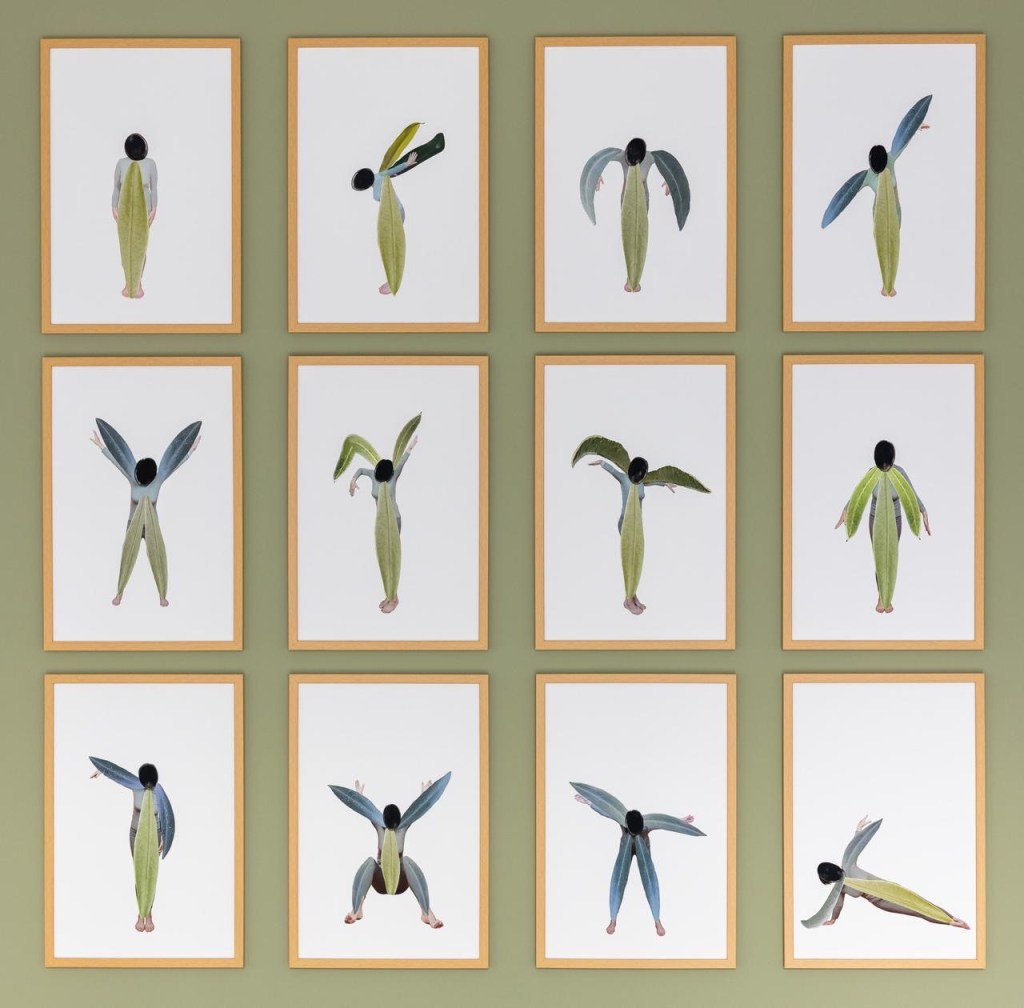
In November 2025, my solo exhibition “Gölge Fısıltıları” (“Whispering Shadows”) was exhibited at Merdiven Art Space. In addition to this, in March 2026, I curated the exhibition titled “Yakın Takip” (“Close Follow-Up”) held at Galeri Miz.
In the near future, I will realize an upcycle exhibition in Istanbul. I will also take part in an exhibition organized by GaleriMiz as a parallel event of the Mardin Biennial, and my work is currently shaped through the ongoing agenda we live in and the personal and social feelings related to it.


 ArtMeant* Project
Yorum bırakın