
Author: Açelya Dursun
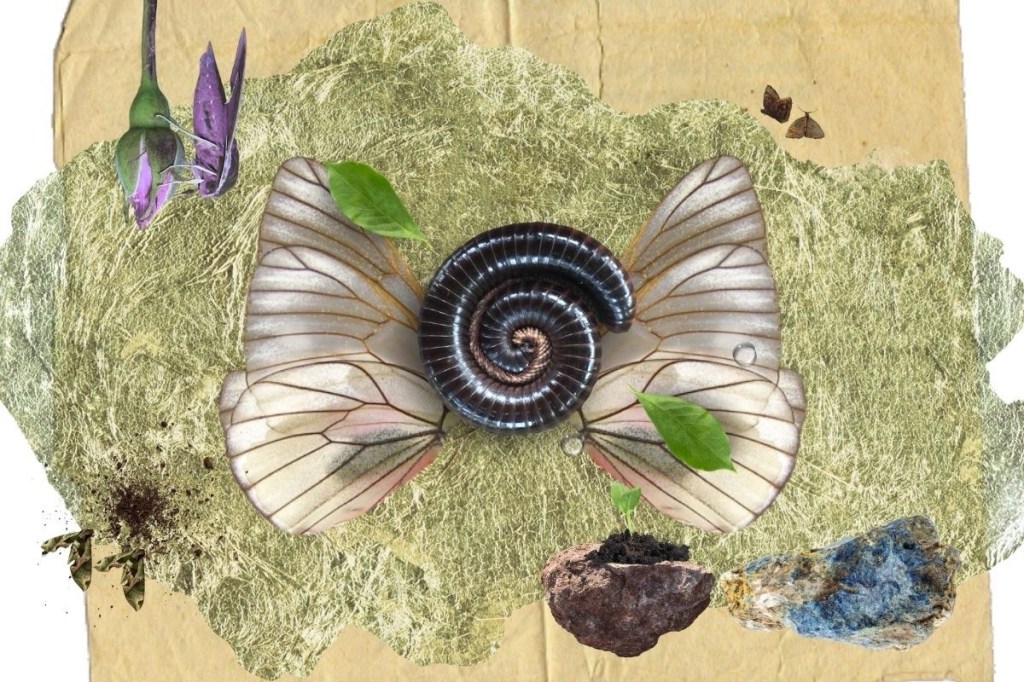
For much of art history, nature has been seen primarily as a source of inspiration or as a subject to be depicted. Landscape paintings, pastoral scenes, and still lifes presented nature as an external world to be observed and represented.
However, with modern and contemporary art, nature has ceased to be merely a passive object. It has increasingly become an active participant and a medium in artistic production.
Today many artists go beyond representing nature and begin to use it directly as a tool of creation. From material choices to spatial interventions, nature is no longer just a backdrop. It becomes a collaborator in the artistic process.
In this article, we will explore how Andy Goldsworthy, Anselm Kiefer and Wolf Kahn engage with nature as a medium in distinct yet complementary ways.
Rethinking the Nature and Culture Divide
For centuries, modern thought maintained a strict divide between nature and culture. In We Have Never Been Modern (1991), Bruno Latour argues that this divide is artificial. Nature and culture are not separate, self-contained systems. Modernity, he claims, has imposed this separation.
Ecological theorist Timothy Morton introduces the concept of hyperobjects, phenomena like climate change or ecosystems that exceed human perception and comprehension. Nature is no longer a static landscape to be observed but a complex, multilayered system that humans are deeply entangled with.
This perspective provides a theoretical foundation for understanding nature not just as subject matter, but as an active medium of artistic production.
Jane Bennett’s Vibrant Matter adds another layer to this discussion by emphasizing the agency of nonhuman forces. For Bennett, matter is not inert. It possesses its own vitality and capacity to act. From this viewpoint, artists work with nature not as passive material but as a creative partner.
Andy Goldsworthy: Collaboration with Natural Forces
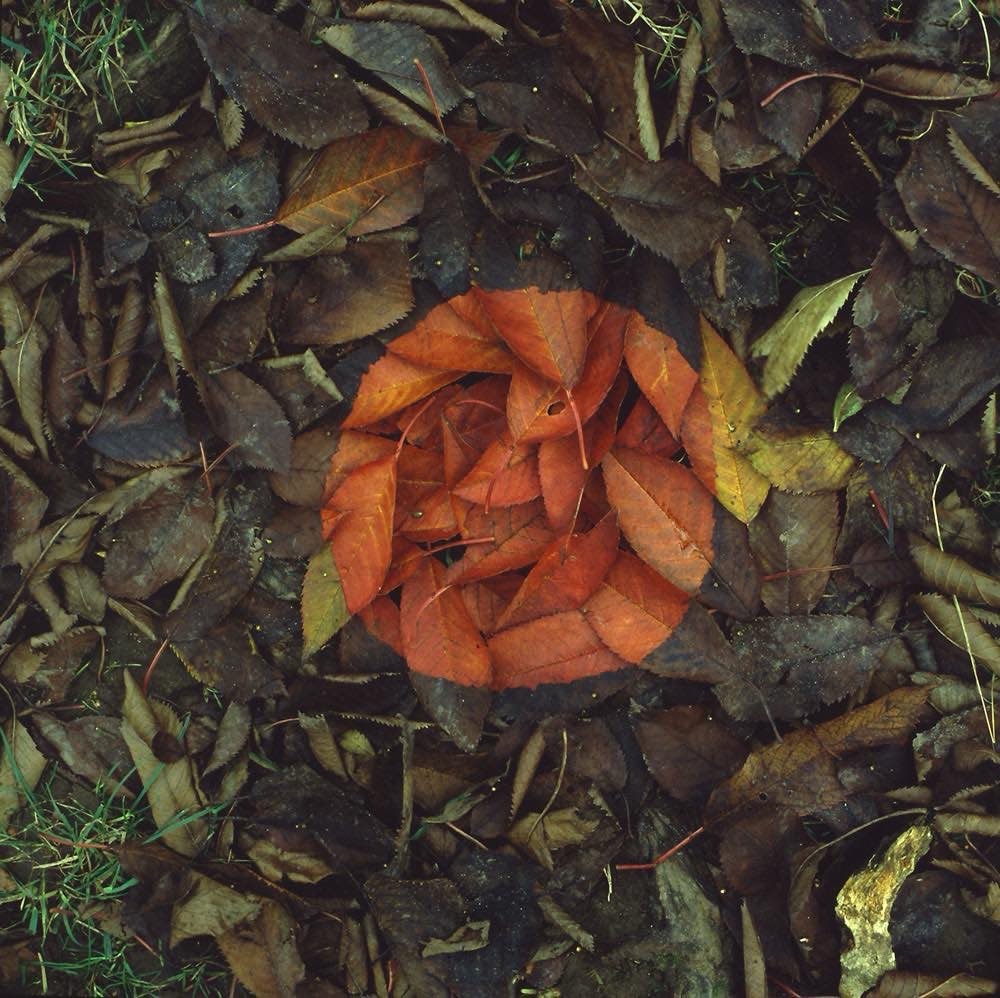
Red leaf patch, Brough, Cumbria, November 1983
© Andy Goldsworthy
In Andy Goldsworthy’s practice, nature determines both material and form. Working with elements like leaves, stones, ice or branches, he creates ephemeral installations that are ultimately shaped by environmental forces such as rain, wind or time.
The final artwork is often a collaboration between the artist’s intent and nature’s unpredictable interventions. His works emphasize process, impermanence and dialogue between human creativity and natural transformation.
Anselm Kiefer: History Embedded in the Earth
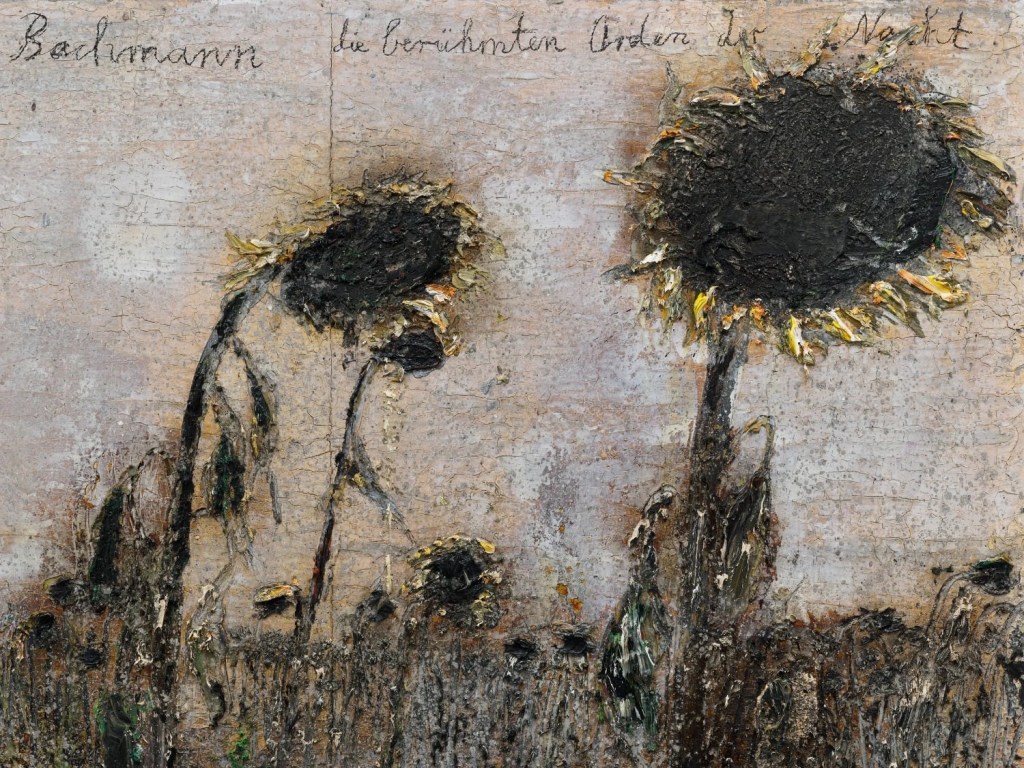
“für Ingeborg Bachmann 2023-25”
© Anselm Kiefer – Photo: White Cube (Theo Christelis)
Anselm Kiefer approaches nature differently. He incorporates organic materials such as soil, straw, ash and clay into his monumental paintings and sculptures. These substances are not mere textures. They carry symbolic and historical weight, evoking memory, decay and cultural trauma.
For Kiefer, the physical qualities of natural matter, its fragility, density or instability, are integral to meaning-making. Nature here shapes not only the material surface but also the narrative depth of the work.
Wolf Kahn: Sensory Medium of Light and Color
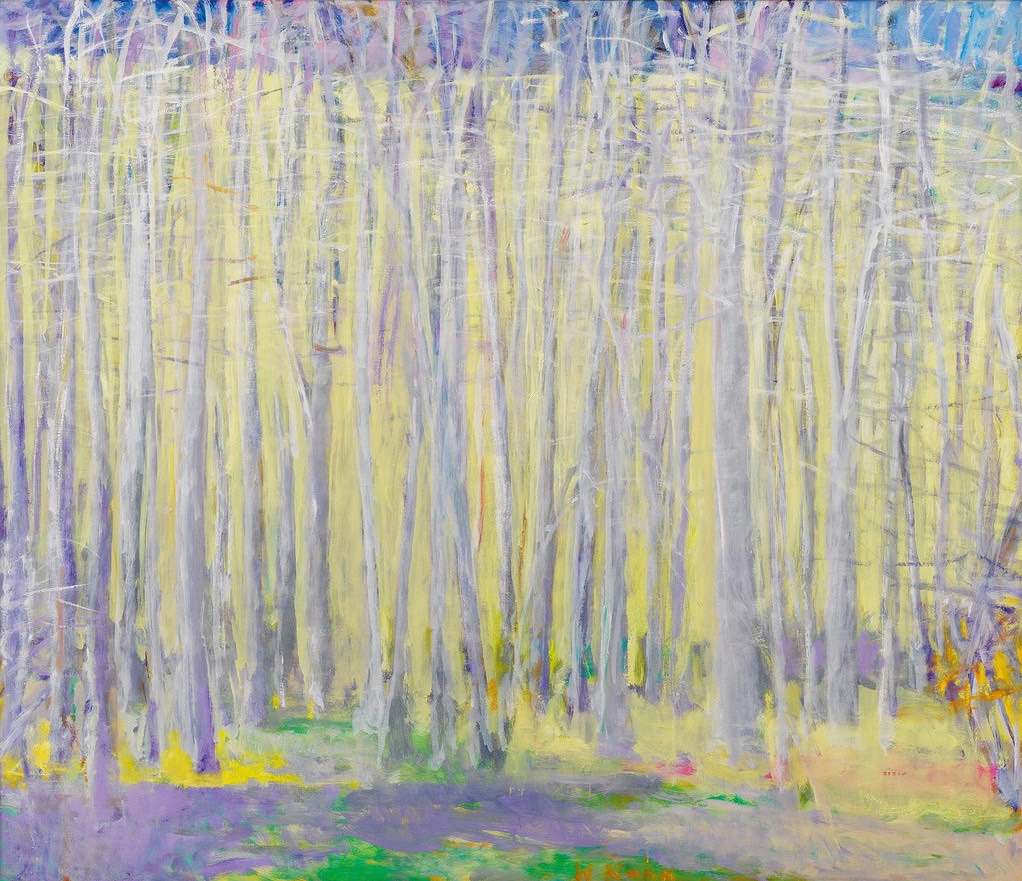
Wolf Kahn, Pale Forsythia and Lilac, 2002
Although Wolf Kahn does not use natural materials directly, he employs light and color as sensory mediators between the viewer and landscape. His vibrant paintings go beyond literal representation, translating the atmosphere, shadow and chromatic harmonies of nature into a unique visual language.
Kahn’s work makes nature felt rather than merely seen, demonstrating that “nature as medium” can also operate through perception and affect, not only through physical matter.
The works of Goldsworthy, Kiefer and Kahn share a crucial shift. Nature is no longer a backdrop but occupies a central role in artistic production. Each artist engages with nature differently, through material collaboration, historical layering or sensory translation, but all of them challenge the modern divide between nature and culture.
As philosopher Byung-Chul Han notes in his critique of the consumer society, modernity often turns nature into a passive image, something to be consumed rather than actively engaged with. The artists discussed here quietly resist this reduction by treating nature as an active force, reintroducing it as a living participant in artistic creation.
References
Latour, Bruno. We Have Never Been Modern. Cambridge, MA: Harvard University Press, 1993.
Morton, Timothy. Hyperobjects: Philosophy and Ecology after the End of the World. Minneapolis: University of Minnesota Press, 2013.
Bennett, Jane. Vibrant Matter: A Political Ecology of Things. Durham, NC: Duke University Press, 2010.
Goldsworthy, Andy. Andy Goldsworthy: A Collaboration with Nature. New York:Harry N. Abrams, 1990.
Rosenthal, Mark (Ed.). Anselm Kiefer. Philadelphia Museum of Art, 1987.
Kahn, Wolf. Wolf Kahn’ s America. New York: Harry N. Abrams, 2003.
Han, Byung-Chul. The Burnout Society. Stanford, CA: Stanford University Press, 2015.


 ArtMeant* Project
Yorum bırakın